
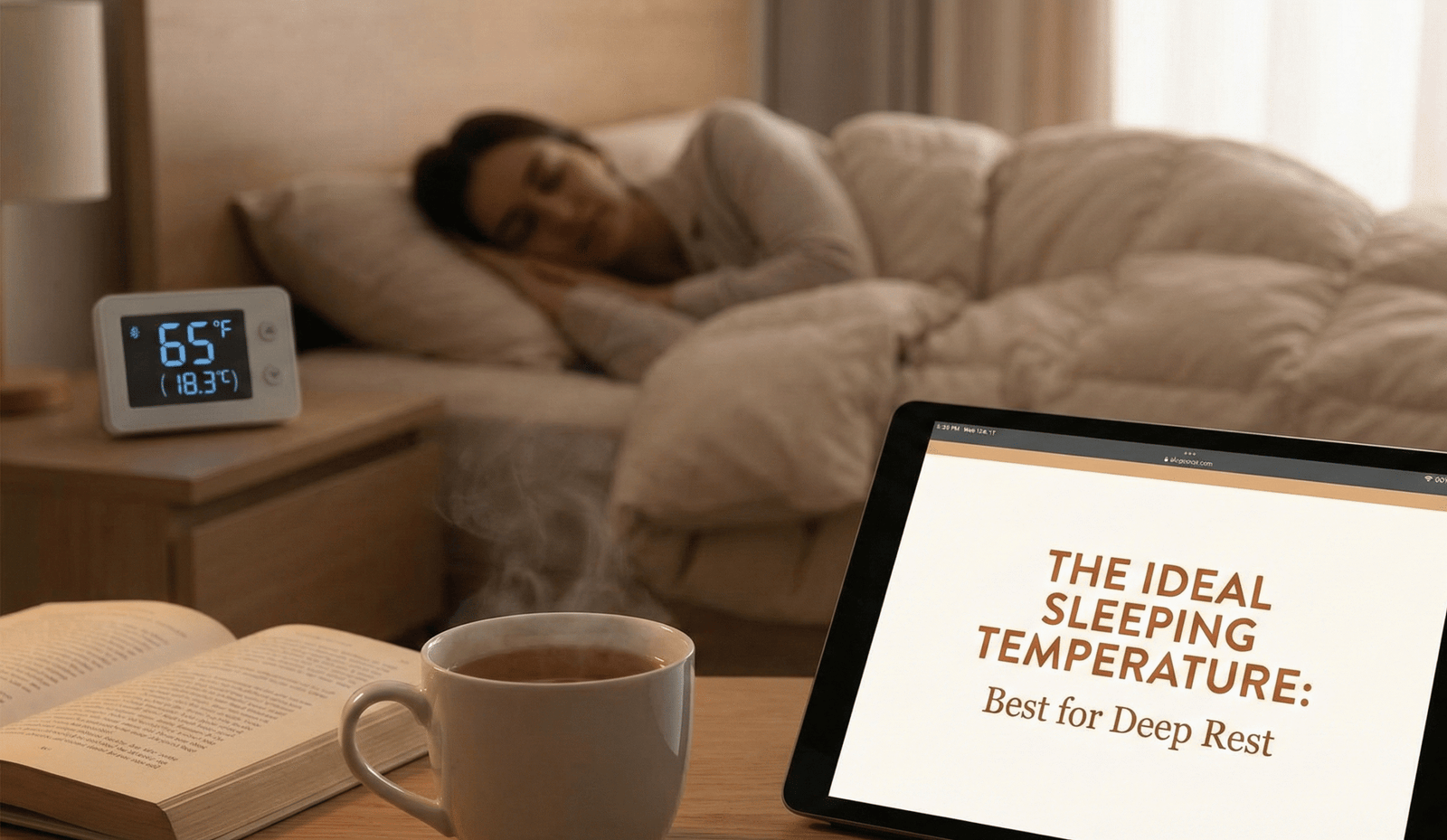
The Ideal Room Temperature for Sleeping: Science, Settings & Strategy
We have all been there: tossing and turning, flipping the pillow to the “cool side,” or waking up shivering in the middle of the night. Sleep is the foundation of health, but few people realize that your thermostat settings are just as critical as your mattress quality. Achieving the perfect thermal environment isn’t just about comfort; it’s about hacking your body’s circadian rhythm for deep, restorative rest.
As experts in HVAC and home automation, we have analyzed the data to help you optimize your home environment. From understanding how your thermostat works to choosing the best control systems, this guide covers it all.
⚡ The Quick Answer (AEO)
According to sleep psychologists and the National Sleep Foundation, the ideal temperature for sleeping is between 60°F and 67°F (15.6°C – 19.4°C).
This range supports the body’s natural core temperature drop, which signals the brain to release melatonin and enter REM sleep. Anything above 75°F or below 54°F can cause restlessness and fragment your sleep cycles.
The Science: Why 65°F is the Magic Number
Your body operates on a 24-hour internal clock called the circadian rhythm. Part of this cycle involves thermoregulation. About two hours before you wake up, your body temperature rises. Conversely, to initiate sleep, your core body temperature must drop by about 2 to 3 degrees Fahrenheit.
If your room is too warm, your body struggles to dump this excess heat, preventing you from falling asleep. This is why a programmable or smart thermostat is an essential tool for health—it automates this cooling process right before bedtime.
Temperature Guidelines by Age Group
While 65°F is the gold standard for adults, vulnerability to cold varies by age.
| Group | Ideal Range | Notes |
|---|---|---|
| Adults | 60°F – 67°F | Focus on breathable bedding and airflow. |
| Infants/Babies | 65°F – 70°F | Babies cannot regulate temperature well. Avoid over-bundling. |
| Seniors | 66°F – 70°F | Older adults may perceive cold more intensely due to slower metabolism. |
Optimizing Your HVAC for Sleep
Setting the number on the wall is step one, but ensuring your system delivers that temperature is step two. If you set it to 65°F but wake up sweating, you might be dealing with a system that is not reaching the set temperature.
1. Use “Sleep Schedules”
Don’t manually change the temp every night. Use the scheduling feature. Set the temperature to drop 1 hour before your target bedtime. If you are unsure how to program your specific model, check our thermostat instructions for homeowners.
2. Fan Settings: Auto vs. On
For sleeping, the “Auto” setting is usually best to control humidity. However, if you need “white noise” and constant airflow to keep temperatures even, setting the fan to “On” can help. Be aware this uses more energy. Read our analysis: How much electricity does the thermostat fan use?
3. Sensor Placement
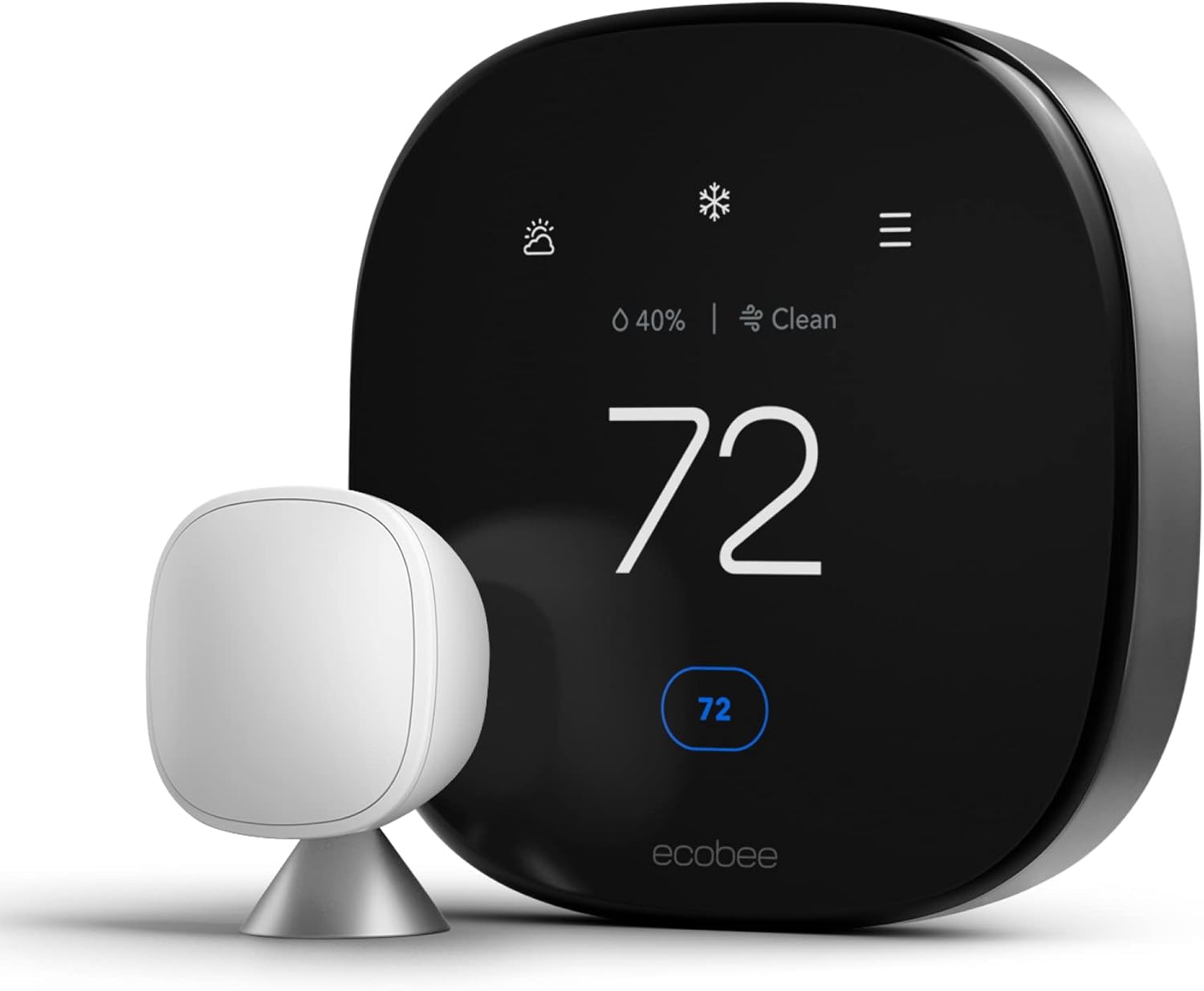
If your thermostat is in the hallway but you sleep with the door closed, your bedroom might be 5 degrees hotter than the hallway. This is a classic issue. Smart thermostats with Remote Sensors (like Ecobee or Nest) solve this by reading the temperature *in the bedroom*.
Top Thermostats to Master Your Sleep Environment
If you are still using an old analog dial (like the Honeywell HZ311), upgrading is the single best investment for better sleep. (See: How to switch out an HZ311 for an Ecobee).

Google Nest Learning Thermostat
Best for Simplicity. It learns your bedtime schedule automatically. The “Sunblock” feature prevents it from reading false temps if your bedroom gets morning sun.
Check Price on AmazonCompare: Honeywell vs Nest
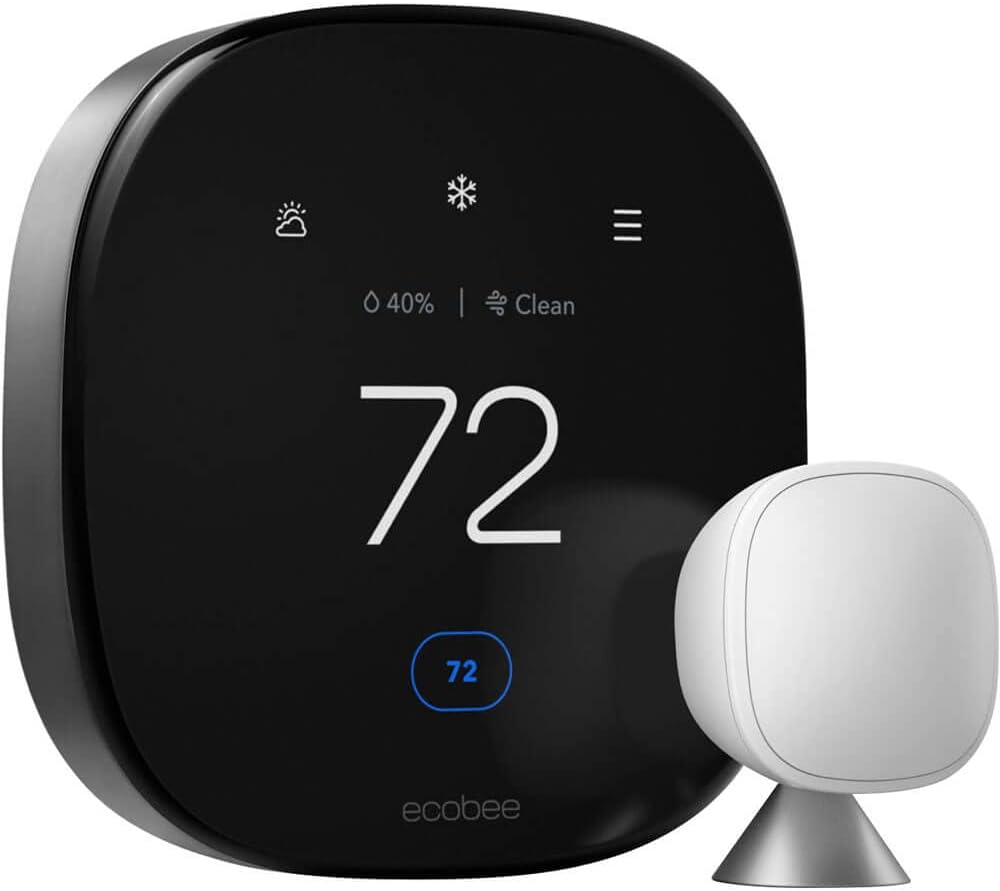
ecobee Smart Thermostat Premium
Best for Hot/Cold Rooms. Includes a separate SmartSensor you can place on your nightstand to ensure your air is 65°F, not just the hallway’s air.
Check Price on AmazonCompare: Nest vs Ecobee
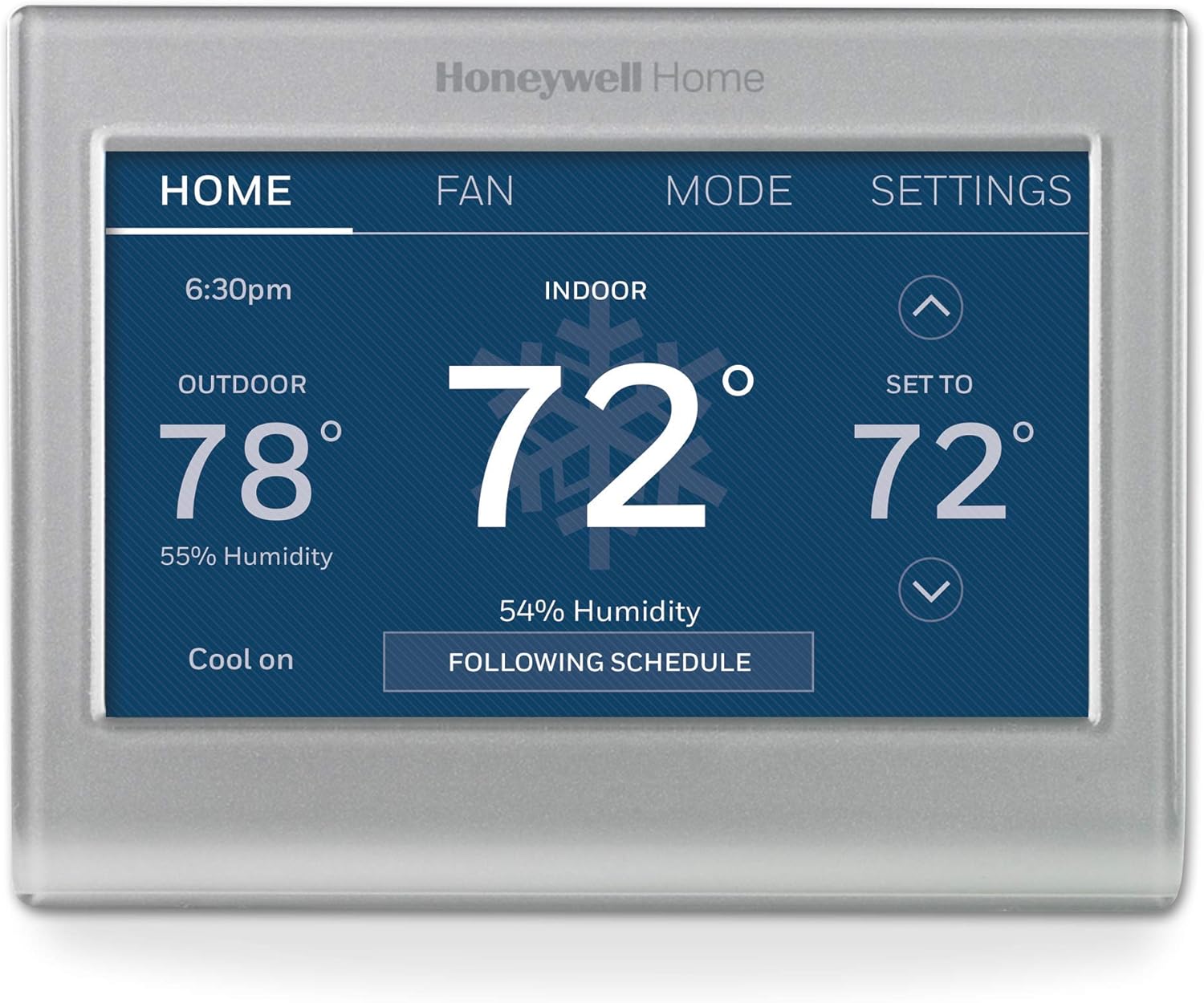
Honeywell Home Smart Color
Best Value. Reliable, customizable screen color to match your decor, and excellent scheduling features without the “learning” curve.
Check Price on AmazonCompare: Honeywell vs Emerson
Keyword Deep-Dive: What People Actually Search For
Beyond the core “ideal room temperature for sleeping” question, a wide cluster of related searches consistently comes up around this topic, and each represents a real gap in most existing guides. Understanding these related questions helps explain why a single number on a thermostat is only part of a much bigger picture.
“What temperature should I set my thermostat at night in summer vs winter?”
The honest answer is that the target sleep temperature itself doesn’t change between seasons — 60–67°F remains the goal year-round — but the path to get there does. In summer, this usually means actively cooling the home down from a warmer daytime baseline, while in winter it often means allowing the home to cool slightly from a warmer daytime heating setpoint rather than actively pushing it colder.
“Is it bad to sleep in a cold room?”
A cool room supports sleep, but there’s a meaningful difference between “cool” and “cold.” Once a bedroom drops much below 54°F, the body has to work to generate heat through shivering and increased metabolism, which can be just as disruptive to sleep quality as a room that’s too warm, simply through a different mechanism.
“Why do I sleep better in a hotel than at home?”
This is a surprisingly common question, and bedroom temperature is frequently part of the answer. Hotels typically maintain a consistent, moderate temperature through commercial-grade HVAC systems, use crisp, breathable white bedding, and block outside light with heavy blackout curtains — effectively hitting several of the checklist items covered in this guide simultaneously, which is part of why the environment feels so conducive to sleep even away from home.
“Best temperature for sleeping with a fan on”
Because a fan enhances evaporative cooling rather than lowering air temperature directly, many people find they’re comfortable at a slightly higher thermostat setpoint — often 68–70°F — when a fan is running directly on them, compared to the 65°F baseline recommended without airflow assistance.
“Ideal temperature for sleeping with a baby in the room”
When an infant shares a room with an adult, the room typically needs to sit in the warmer 65–70°F range appropriate for the baby rather than the slightly cooler adult-preferred range, since infants cannot regulate body temperature independently and are more vulnerable to both overheating and excessive cold.
“How to keep upstairs bedroom cool in summer”
Upstairs rooms often run several degrees warmer than the rest of the house due to natural heat rise, making them one of the hardest rooms in a home to bring down to an ideal sleep temperature. Ceiling fans, additional attic insulation, reflective window film, and — where the HVAC system allows — a dedicated zone damper for upstairs rooms all help address this specific and very common complaint.
Beyond the Thermostat: The Hidden Variable of Humidity
Most people obsess over the number on the wall and completely ignore the number that determines how that temperature actually feels: relative humidity. Air holds moisture, and moisture changes how efficiently your skin can evaporate sweat and shed heat. A bedroom sitting at a “perfect” 65°F can feel muggy and oppressive at 70% relative humidity, or feel unexpectedly chilly and dry at 25%. Sleep scientists generally recommend keeping indoor humidity between 40% and 50% for the most comfortable, breathable sleeping environment.
When humidity climbs too high, sweat sits on the skin instead of evaporating, which blocks the very heat-dumping process your body relies on to trigger sleep onset. This is why a room can register 68°F on the thermostat but still feel unbearably sticky in July. Conversely, winter heating systems tend to dry the air out aggressively, sometimes pushing indoor humidity down into the teens. Dry air irritates the nasal passages and throat, which can cause snoring, dry cough, and a scratchy sensation that pulls you out of deep sleep even if the temperature itself is technically ideal.
Signs Your Bedroom Humidity Is Off
A few common indicators can tell you whether moisture, not just temperature, is sabotaging your sleep:
| Symptom | Likely Cause | Fix |
|---|---|---|
| Waking up with a dry throat or bloody nose | Humidity below 30% | Run a cool-mist humidifier near the bed |
| Sheets feel damp, mirrors fog | Humidity above 60% | Run a dehumidifier or increase AC runtime |
| Static shocks, dry skin flaking | Very low winter humidity | Add houseplants or a whole-home humidifier |
| Musty smell, visible condensation on windows | Excess humidity plus poor ventilation | Crack a window or run an exhaust fan briefly before bed |
Pairing a smart thermostat with a hygrometer, or choosing a thermostat model with built-in humidity sensing, gives you a complete picture of your sleep environment rather than just half of it. Some higher-end smart thermostats can even trigger a connected whole-home humidifier or dehumidifier automatically once humidity drifts outside your target band.
Bedding and Fabric: Your Second Layer of Climate Control
Your thermostat controls the air in the room, but your sheets, blankets, and mattress control the microclimate immediately surrounding your body — and for many sleepers, that microclimate matters more than the reading on the wall. Fabric choice determines how well heat and moisture move away from your skin overnight.
Comparing Common Sheet and Blanket Materials
- Cotton (especially percale weave): Highly breathable, moisture-wicking, and affordable. A crisp percale weave sleeps noticeably cooler than a dense sateen weave of the same fiber.
- Linen: Naturally moisture-wicking and thermoregulating; linen fibers are hollow and allow superior airflow, making it a favorite for hot sleepers and warmer climates.
- Bamboo-derived viscose/lyocell: Soft, silky, and good at pulling moisture away from the body, though production methods vary in eco-friendliness.
- Microfiber/polyester blends: Budget-friendly and durable, but they trap heat and moisture far more than natural fibers, making them a poor choice for anyone who runs warm.
- Flannel and fleece: Excellent insulators for cold sleepers in winter, but generally too warm for a 65°F target room unless paired with a lower thread-count top sheet.
Duvets and comforters are often rated by “tog” — a European measure of thermal insulation. A lightweight summer duvet typically sits around 4.5 tog, a three-season duvet around 9 tog, and a heavy winter duvet 12 tog or higher. Matching your duvet’s tog rating to your thermostat’s seasonal setpoint prevents the common mistake of fighting your bedding against your HVAC system all night.
Cooling Mattress Pads and Toppers
If your mattress sleeps hot — a common complaint with dense memory foam — a breathable mattress topper or a phase-change cooling pad can make a bigger nightly difference than another degree off the thermostat. These products work by either increasing airflow beneath the body or actively absorbing and redistributing body heat through gel or phase-change materials. They’re a useful complement to, not a replacement for, proper room temperature control, since no topper can fully counteract a bedroom sitting at 78°F.
Air Conditioning, Fans, and Windows: Choosing Your Cooling Method
Not everyone controls their bedroom temperature with a central smart thermostat. Depending on your climate, home layout, and budget, you may be choosing between central air, a window or portable AC unit, a simple box fan, or just opening a window. Each approach has real trade-offs for sleep quality.
| Method | Pros | Cons |
|---|---|---|
| Central AC with smart thermostat | Whole-home consistency, schedulable, remote sensors available | Higher upfront and running cost |
| Window/portable AC unit | Targeted cooling for one room, lower install cost | Can be noisy, less precise temperature control, blocks a window |
| Box or ceiling fan | Cheap to run, adds airflow that aids sweat evaporation, good white noise | Doesn’t actually lower air temperature, can dry out eyes/sinuses |
| Open window (natural ventilation) | Free, brings in fresh air | Unpredictable, invites allergens/noise, unsafe temperature swings in extreme climates |
A fan doesn’t cool the air the way an air conditioner does — it simply moves air across your skin, accelerating evaporative cooling. That’s why a fan can make a 72°F room feel more like 68°F to your body, even though the thermostat reading hasn’t changed. Combining a modest AC setpoint with a ceiling fan running counter-clockwise in summer is one of the most energy-efficient ways to approximate that magic 65°F feel without the electricity bill of running the compressor harder.
Climate-Specific Strategies
The “ideal” sleep temperature doesn’t change based on where you live, but the strategy for achieving it absolutely does.
Hot, Humid Climates
In regions with high summer humidity, dehumidification matters as much as raw cooling. Oversized AC units that cool a room quickly but cycle off before removing enough moisture can leave a room feeling clammy despite hitting the target temperature. Running the fan on “Auto” rather than “On” allows more complete moisture removal during each cooling cycle.
Hot, Dry Climates
In arid regions, evaporative (“swamp”) coolers can be a highly efficient alternative to traditional AC, since they add helpful humidity while cooling. However, in already-dry desert climates, be mindful that indoor air can still get too dry for comfortable breathing overnight.
Cold Climates
In winter-dominant climates, forced-air furnaces dry out indoor air significantly. Sleepers here often need to actively add humidity even while keeping the room cool, and should be cautious about oversized flannel bedding pushing body temperature too high under a well-insulated duvet.
Mixed/Four-Season Climates
These climates benefit most from a smart thermostat with seasonal scheduling profiles, since the “right” combination of fan mode, humidity target, and setpoint can change dramatically between January and July.
Life Stages and Special Sleep Situations
Pregnancy and Sleep Temperature
Many pregnant people report running noticeably warmer than usual due to increased blood volume and metabolic rate. It’s common to want the thermostat a degree or two cooler than a partner prefers during this time. Breathable, moisture-wicking sheets and a cooling pillow can help manage this without needing to keep the whole house uncomfortably cold for a partner who runs cooler.
Menopause, Hot Flashes, and Night Sweats
Hormonal shifts during perimenopause and menopause frequently trigger night sweats and hot flashes that can disrupt sleep multiple times a night. While a thermostat can’t eliminate a hot flash, keeping the baseline room temperature on the cooler end of the recommended range (60–63°F) gives the body more of a buffer before a flash becomes intolerable. Layering bedding so warm layers can be quickly kicked off, combined with a bedside fan, is a practical non-medical strategy many people use alongside guidance from their healthcare provider.
Couples With Different Temperature Preferences
“Thermostat wars” are one of the most common household sleep conflicts. A few practical compromises exist beyond simply negotiating a single setpoint:
- Dual-zone bedding: one partner uses a warmer duvet, the other a lighter one, on a shared bed.
- Personal bedside fans or small heaters aimed at only one side of the bed.
- Cooling mattress pads with dual-zone temperature control, allowing each side of the mattress to run at a different temperature.
- Settling on a compromise room temperature (often 66–68°F) and letting bedding, not the thermostat, handle the rest of the personalization.
Children and Teens
Older children and teenagers generally fall into the same 65–68°F comfort range as adults, though growth spurts and hormonal changes during adolescence can temporarily shift individual preferences. Unlike infants, school-age children can safely use adult-style bedding and don’t need the warmer nursery-specific range discussed earlier in this guide.
Sleeping With Pets
A dog or cat sharing the bed adds a surprising amount of body heat to the immediate sleeping area. Pet owners who run warm at night, or who share a bed with a larger dog, may find they need to set the thermostat a degree or two cooler than they would sleeping alone to compensate for that extra warmth radiating under the covers.
Temperature, Health Conditions, and Sleep Quality
Room temperature doesn’t just affect comfort — it interacts with several health-related sleep factors worth understanding.
Insomnia and Temperature Sensitivity
People who struggle with chronic insomnia are often more sensitive to environmental disruptions, including a room that’s slightly too warm. Because the drop in core body temperature is part of the biological trigger for sleep onset, a room that’s too warm can specifically make it harder to fall asleep in the first place, even if it doesn’t wake someone who’s already asleep.
Sleep Apnea and Airway Comfort
Very dry, overheated bedroom air can aggravate snoring and airway irritation for people with sleep apnea or who use a CPAP machine. Many CPAP machines include a built-in humidifier for exactly this reason, and keeping ambient bedroom humidity in the 40–50% range can complement that equipment.
Cardiovascular Considerations
Extreme bedroom temperatures — both very hot and very cold — have been associated in sleep research with increased nighttime heart rate and disrupted sleep architecture, which over time can compound existing cardiovascular strain. This is one more reason the moderate 60–67°F range is recommended broadly rather than pushing to temperature extremes in either direction.
Athletic Recovery
Athletes and highly active individuals rely heavily on deep, slow-wave sleep for muscle repair and recovery. Because deep sleep stages are especially sensitive to thermal discomfort, many sports scientists recommend athletes err toward the cooler end of the ideal range, particularly after high-intensity training days when core body temperature is already elevated at bedtime.
Smart Home Integration: Geofencing, Apps, and Wearables
Modern smart thermostats extend far beyond a simple schedule. Geofencing uses your phone’s location to detect when you’re heading home, allowing the thermostat to begin pre-cooling or pre-heating your bedroom before you even walk in the door — useful for hitting your target sleep temperature right at bedtime without running the system all evening.
Many people now pair their thermostat data with sleep-tracking wearables or bedside sleep trackers. Correlating a wearable’s sleep-stage and heart-rate-variability data against your thermostat’s overnight temperature log can reveal a surprisingly personal “sweet spot” that may sit slightly outside the general 60–67°F guideline. Some smart thermostat apps allow you to export or view historical temperature logs specifically for this kind of side-by-side comparison.
Energy Cost Considerations by Setpoint
Lower nighttime setpoints in summer, or higher ones in winter, do carry an energy cost. As a general rule of thumb used by HVAC professionals, each degree you push your thermostat further from the outdoor temperature during heating or cooling season can increase energy use by roughly 1–3%, depending on your home’s insulation and system efficiency. Scheduling the setpoint change to begin an hour before bed — rather than running an aggressive temperature all evening — is the most efficient way to capture the sleep benefits of a 65°F bedroom without a much higher utility bill.
Temperature Myths Worth Retiring
A number of persistent myths about bedroom temperature circulate online, and clearing them up helps put the rest of this guide in context.
Myth: Colder Is Always Better
As covered above, there’s a floor to this benefit. Once a room drops well below the mid-50s Fahrenheit, comfort and sleep quality both decline rather than continuing to improve, so treating “as cold as possible” as the goal is a misreading of the underlying research.
Myth: Everyone Sleeps Best at Exactly 65°F
65°F is a well-supported average recommendation, not a universal constant. Age, body composition, hormonal status, bedding choice, and individual metabolism all shift the truly ideal number for a given person by several degrees in either direction, which is why this guide spends so much time on the variables that sit on top of the base recommendation.
Myth: A Programmable Thermostat Alone Guarantees Better Sleep
Scheduling is a powerful tool, but as this guide has covered, humidity, bedding, sensor placement, and structural factors like window exposure and ceiling height can all undermine an otherwise well-programmed schedule. A smart thermostat is necessary but not sufficient on its own.
Myth: Running a Fan Wastes Energy Compared to Air Conditioning
A ceiling or box fan uses a small fraction of the electricity that a compressor-driven air conditioner does, and because it works by enhancing evaporative cooling rather than lowering air temperature, it’s often one of the most cost-effective comfort tools discussed in this entire guide.
Building Your Personal Sleep Temperature Routine
With all of the science and variables covered above, here is a practical way to pull it together into a nightly and seasonal routine:
- Set a baseline schedule. Program your thermostat to begin dropping toward 65°F about an hour before your typical bedtime.
- Check humidity, not just temperature. Aim for 40–50% relative humidity, adjusting with a humidifier or dehumidifier as the seasons change.
- Match bedding to the season. Swap a heavy winter duvet for a lighter one once your daytime schedule stops relying on the furnace regularly.
- Personalize per person. Use bedside fans, dual-zone mattress pads, or different tog-rated bedding to resolve differences between partners rather than compromising the whole room’s setpoint.
- Reassess during life changes. Pregnancy, menopause, illness, or a new pet can all shift your personal comfort point — revisit your setpoint rather than assuming last year’s settings still apply.
- Track and adjust. If you use a sleep-tracking wearable, periodically compare a few nights at 63°F against a few nights at 67°F to see which actually correlates with better sleep-stage data for you specifically.
The Deeper Science: Circadian Rhythm, Melatonin, and Thermoregulation
To really understand why 65°F keeps coming up as the number every sleep guide converges on, it helps to walk through the biological mechanism step by step rather than treating it as an arbitrary recommendation. Your body’s master clock, located in a region of the brain called the suprachiasmatic nucleus, coordinates a daily rhythm of hormone release, alertness, and — critically — core body temperature. Across a normal 24-hour cycle, core temperature is at its lowest point roughly two hours before your typical wake time and climbs steadily through the day, peaking in the early evening before beginning its descent toward bedtime.
This descent isn’t just a passive side effect of lying still; it’s an active physiological process called distal vasodilation, in which blood vessels near the surface of the skin — particularly in the hands and feet — widen to release heat from the body’s core to the environment. This is why your hands and feet often feel warm right before you fall asleep: your body is literally dumping heat through them. If the surrounding air is too warm, that heat has nowhere efficient to go, the core temperature drop stalls, and the release of melatonin — the hormone most associated with sleep onset — is delayed along with it.
Why the Body Prefers a Cooler Environment at Night
From an evolutionary standpoint, this thermoregulatory sleep trigger likely developed because a dropping ambient temperature historically signaled nightfall, cueing the body to prepare for rest well before artificial lighting and climate control existed. Modern bedrooms, especially in summer with air conditioning struggling to keep up, or in winter with overheated forced-air systems, can disrupt this ancient signal simply by keeping the room too warm for the body’s internal cooling process to complete efficiently.
Sleep Architecture and Temperature
Sleep isn’t a single uniform state; it cycles through stages, including light sleep, deep slow-wave sleep, and REM sleep, each with different thermoregulatory characteristics. During REM sleep specifically, the body’s ability to regulate temperature through mechanisms like shivering or sweating is significantly reduced, making the surrounding room temperature even more influential during this stage than during other parts of the sleep cycle. A room that’s too hot or too cold during a REM-heavy stretch of the night — often concentrated in the second half of sleep — can cause more noticeable disruption than the same temperature deviation earlier in the night.
A Night-by-Night Temperature Troubleshooting Framework
If you’ve set your thermostat to the recommended range and you’re still waking up too hot, too cold, or simply unrested, it helps to work through the problem systematically rather than guessing at a new setpoint every few nights.
Step 1: Rule Out Sensor Placement Issues
Before adjusting your target temperature at all, confirm that your thermostat is actually reading the temperature where you sleep. A thermostat mounted in a hallway, near a heat-generating appliance, or in direct sunlight during part of the day can report a reading several degrees off from your actual bedroom air. This is one of the most common — and most overlooked — causes of a bedroom that never quite matches the number on the wall.
Step 2: Separate Air Temperature From Perceived Temperature
If sensor placement checks out, the next variable to isolate is humidity. As discussed earlier, the same air temperature can feel dramatically different depending on moisture content. Before nudging your thermostat setpoint further in either direction, try correcting humidity into the 40–50% band first and reassess comfort for a few nights.
Step 3: Audit Your Bedding Layer
Only after air temperature and humidity are both dialed in should you look at bedding. A too-warm duvet or a heat-trapping mattress topper can make an otherwise perfectly calibrated 65°F room feel like 72°F right at skin level. Seasonal bedding swaps, discussed above, resolve a large share of “my thermostat says 65 but I’m still sweating” complaints.
Step 4: Consider Individual Physiology
If air temperature, humidity, and bedding are all optimized and comfort is still elusive, individual factors — metabolism, hormonal changes, medication side effects, or an underlying sleep disorder — may be at play, and it may be worth tracking your temperature preferences against a sleep diary or wearable device, or discussing persistent night sweats or overheating with a healthcare provider.
Seasonal Thermostat Scheduling Templates
Because the “right” thermostat schedule shifts with the seasons, it can help to have a concrete starting template rather than adjusting from scratch every few months. These are general starting points meant to be fine-tuned to your specific home and comfort preferences.
Summer Sleep Schedule Template
| Time | Action | Target |
|---|---|---|
| 1 hour before bed | Begin cooling cycle | 68°F, fan on Auto |
| At bedtime | Reach sleep setpoint | 65°F |
| Overnight | Hold steady | 65°F, humidity 40-50% |
| 1 hour before wake | Gentle warm-up | 68-70°F |
Winter Sleep Schedule Template
| Time | Action | Target |
|---|---|---|
| 1 hour before bed | Begin cooling from daytime setpoint | 67°F |
| At bedtime | Reach sleep setpoint | 65°F, humidifier running |
| Overnight | Hold steady, avoid overheating from furnace cycling | 63-65°F |
| 1 hour before wake | Warm-up cycle | 68-70°F |
These templates are intentionally conservative starting points. Households in extreme climates, or with specific medical or comfort needs discussed elsewhere in this guide, should adjust the numbers while keeping the same overall shape: a pre-bedtime dip, a steady overnight hold, and a gentle warm-up before waking.
How This Compares to Public Health Guidance
The 60–67°F range referenced throughout this guide isn’t a proprietary figure — it echoes guidance from multiple independent sleep and public-health sources, including sleep foundation recommendations, occupational health guidance on indoor thermal comfort, and pediatric guidance on infant sleep environments. The consistency across these sources, despite covering different populations and different original purposes, is part of why this range has become the de facto standard cited across most sleep hygiene resources rather than a single organization’s isolated opinion.
Frequently Overlooked Culprits Behind a Warm-Feeling Bedroom
Even with an accurate thermostat, correct humidity, and appropriate bedding, a handful of structural and behavioral factors commonly go unnoticed as sources of nighttime overheating.
Electronics and Heat Load
Televisions, chargers, laptops, and even a router left running in the bedroom all generate small amounts of continuous heat. In a small, well-sealed room, this can add up to a noticeable temperature increase over several hours, especially in summer when the AC is already working to overcome outdoor heat gain.
Ceiling Height and Airflow Patterns
Heat rises, and rooms with high ceilings or poor air circulation can develop a warmer layer of air right at head height even when the thermostat reads correctly at a lower mounting point. A ceiling fan set to pull air upward in winter and push it downward in summer helps redistribute this stratified air more evenly.
West- and South-Facing Bedrooms
Bedrooms that receive direct afternoon sun through west- or south-facing windows often retain that solar heat well into the evening, even after the sun sets. Thermal-lined blackout curtains, discussed earlier for their light-blocking benefits, are especially valuable in these rooms since they also reduce this residual solar heat gain.
Closed Doors and Zoning Mismatches
In homes without zoned HVAC, a bedroom door closed for privacy can trap heat that would otherwise circulate to cooler parts of the house. Leaving the door slightly ajar, or investing in a zoned system with a dedicated bedroom damper, can meaningfully improve how closely your room tracks the thermostat’s actual setpoint.
A Note on Sustainability and Year-Round Efficiency
Many of the recommendations in this guide — scheduled setbacks, fan-assisted cooling, improved window insulation, and humidity management — carry a dual benefit that’s worth calling out explicitly: they tend to reduce total HVAC runtime at the same time they improve sleep quality, rather than trading one for the other. A well-insulated, properly humidified bedroom with a smart, scheduled thermostat setback typically uses less energy over a full year than a poorly insulated room fighting a constant, unscheduled setpoint, even though the sleep-optimized room is arguably more comfortable. Framed this way, chasing the ideal sleep temperature isn’t just a comfort upgrade; for most households it’s also a meaningful, low-effort efficiency upgrade.
Putting It All Together: A Comfort Checklist
Use this checklist as a quick reference the next time your sleep quality feels off and you suspect temperature is the culprit:
- Thermostat setpoint is between 60°F and 67°F for adults.
- Sensor location accurately reflects the bedroom, not a hallway or sunny spot.
- Relative humidity sits between 40% and 50%.
- Bedding tog rating matches the current season.
- Sheet fabric is breathable (cotton percale, linen, or bamboo-derived fibers) rather than heat-trapping microfiber.
- Heat-generating electronics are minimized or moved outside the bedroom where practical.
- Blackout, thermal-lined curtains are in place on sun-facing windows.
- Any partner, pregnancy, menopause, or pet-related temperature differences are addressed with bedding or personal fans rather than fighting over the single thermostat number.
- A pre-bedtime cooling or heating schedule is programmed rather than relying on manual adjustments.
Advanced Scenarios & Troubleshooting
The Heat Pump Dilemma
Heat pumps produce heat differently than furnaces. They often run longer and blow cooler air (around 90-95°F) compared to the scorching 120°F of a gas furnace. This can feel drafty at night. If you have a Bosch or similar system, ensure you have a compatible controller.
Resources: Is the Bosch heat pump good? and Best thermostat for Bosch heat pump.
Baseboard Heaters
If your bedroom relies on electric baseboard heaters, standard smart thermostats won’t work without a relay. You need a line-voltage specific thermostat to prevent clicking noises and huge temperature swings.
Read: Thermostat for baseboard heaters guide.
“Ghost” Readings & Glitches
Is your Sensi or Wyze acting up right before bed? A screen that clicks but doesn’t turn on can be a sign of a power stealing issue or a bad C-wire.
Fixes: Why is my Sensi not working? | How to reset Sensi | Clicking but not turning on.
Blackout Curtains and Insulation Effects
Windows are often the single largest source of unwanted heat gain in summer and heat loss in winter, and both directly affect how hard your thermostat has to work to hit a sleep-friendly temperature. Blackout curtains with a thermal lining do double duty: they block the light that suppresses melatonin production, and they add a meaningful layer of insulation against the glass. In older homes with single-pane windows, this can shave several degrees off the temperature swing your bedroom experiences overnight, meaning your HVAC system cycles less and maintains a steadier 65°F rather than swinging several degrees in either direction.
Regional and Seasonal Energy Cost Snapshot
Because so much of this guide touches on running the HVAC system differently overnight than during the day, it’s worth understanding roughly how that translates into real household costs, even though exact numbers vary by local utility rates, insulation quality, and system efficiency.
| Strategy | Typical Overnight Setpoint | Relative Energy Impact |
|---|---|---|
| No nighttime setback (constant daytime temp) | 72°F year-round | Highest — system works hardest with no relief overnight |
| Modest scheduled setback | 68°F summer / 66°F winter | Moderate savings, minimal comfort trade-off |
| Recommended sleep range | 65°F | Best balance of sleep quality and efficiency for most homes |
| Aggressive setback | 60-62°F | Higher heating cost in winter; minimal added cooling cost in summer if paired with a fan |
Well-insulated, newer homes tend to see a smaller cost difference between these tiers because the building envelope holds the setpoint more efficiently, while older or poorly insulated homes may see a more noticeable utility bill impact from aggressive winter setbacks specifically. This is one more reason a smart thermostat with a gradual, scheduled ramp — rather than a sudden manual jump of several degrees right at bedtime — tends to be both more comfortable and more efficient than an all-or-nothing approach.
Renters and Apartment-Specific Considerations
Not everyone has full control over their HVAC system, and renters in particular often face constraints that homeowners don’t. A few common apartment-specific issues are worth addressing directly.
Shared or Building-Controlled Heating Systems
Many older apartment buildings use a central boiler system with no individual unit control, meaning residents can’t lower the overnight temperature the way a standalone smart thermostat would allow. In these situations, portable fans, breathable bedding, and even a window cracked slightly (where climate and safety allow) become the primary tools for approximating the ideal sleep range, since the building-wide setpoint often can’t be changed.
Window and Portable Units in Rentals
Renters relying on a window AC unit or portable air conditioner for a single bedroom should pay close attention to unit sizing. An undersized unit will run constantly without ever quite reaching the target temperature, while an oversized unit can cool the room quickly but cycle off before adequately dehumidifying it — leading to the “cool but clammy” feeling discussed earlier in this guide.
Smart Thermostats in Rental-Friendly Formats
For renters who do control their own unit but don’t want to install a hardwired smart thermostat, plug-in smart AC controllers and portable unit adapters exist that add scheduling and remote-control functionality to an existing window or portable unit without any permanent installation, letting renters apply many of the same scheduling principles covered in this guide.
Common Questions (FAQ)
Q: Will a smart thermostat save me money while I sleep?
A: Yes, by allowing the home to cool down (in winter) or warm up (in summer) when you are under the covers, you reduce the load on your HVAC. See: Best smart thermostat for energy savings.
Q: What about winter vacations?
A: If you leave your home for the holidays, don’t turn the heat off completely. Set it to at least 55°F to prevent frozen pipes. Read: Winter vacation settings.
Q: Is Wi-Fi necessary for a bedroom thermostat?
A: Not strictly, but the ability to change the temperature from your phone without getting out of bed is a luxury worth the cost. See: Are WiFi thermostats worth it?
Q: What’s the ideal humidity level to pair with a 65°F bedroom?
A: Most sleep specialists recommend keeping relative humidity between 40% and 50% alongside a 60–67°F setpoint, since humidity outside that band can make the same temperature feel far warmer or colder than it reads.
Q: Does turning the thermostat down further than 65°F improve sleep even more?
A: Not necessarily. Temperatures below roughly 54°F can become counterproductive, triggering shivering and light, fragmented sleep rather than the deep, restorative stages you’re aiming for.
Q: Why do my partner and I disagree so much on bedroom temperature?
A: Differences in body composition, metabolism, hormones, and even mattress-side airflow can all shift individual comfort points by several degrees, which is why dual-zone bedding or personal fans are often more effective than negotiating a single thermostat number.
Q: Can a ceiling fan really replace air conditioning for sleep?
A: A fan doesn’t lower air temperature, but by increasing airflow across the skin it accelerates evaporative cooling, which can make a room feel several degrees cooler than the thermostat reading — useful for stretching the efficiency of a higher AC setpoint.
Q: Should I change my thermostat schedule between summer and winter?
A: Yes. Most smart thermostats support seasonal profiles, and adjusting your pre-bedtime cooling or heating schedule, along with your humidity targets, as the seasons change keeps the room in the ideal range year-round rather than relying on one fixed setting.
Q: Does bedroom temperature affect children differently than adults?
A: School-age children and teens generally do well in the same 65–68°F range as adults, while infants need a warmer 65–70°F range since they cannot regulate their own body temperature as effectively.
Q: What bedding fabric sleeps the coolest?
A: Linen and crisp percale-weave cotton are generally considered the most breathable options, since their fiber structure and weave allow superior airflow and moisture-wicking compared to sateen cotton, microfiber, or flannel.
Q: Can night sweats from menopause be managed with the thermostat alone?
A: A cooler baseline room temperature can reduce the intensity of hot flashes’ impact on sleep, but the thermostat is only one part of a broader strategy that should be discussed with a healthcare provider alongside bedding choices and personal cooling devices.
Q: Is it worth pairing a sleep tracker with my smart thermostat data?
A: For sleepers who want to fine-tune beyond the general guideline, comparing a wearable’s sleep-stage data against a thermostat’s temperature log across several nights can reveal a more personalized ideal setpoint than the standard 60–67°F range alone.




 Home
Home
 Info
Info
 Compare
 Reviews
 Shop
Shop