
Stanley vs Hydro Flask vs Yeti Thermos: Which Vacuum-Insulated Bottle Actually Wins?
Three of the biggest names in vacuum insulation, one buying decision. Here’s how Stanley, Hydro Flask, and Yeti actually compare on temperature retention, durability, price, and everyday livability — based on hands-on use, not marketing copy.
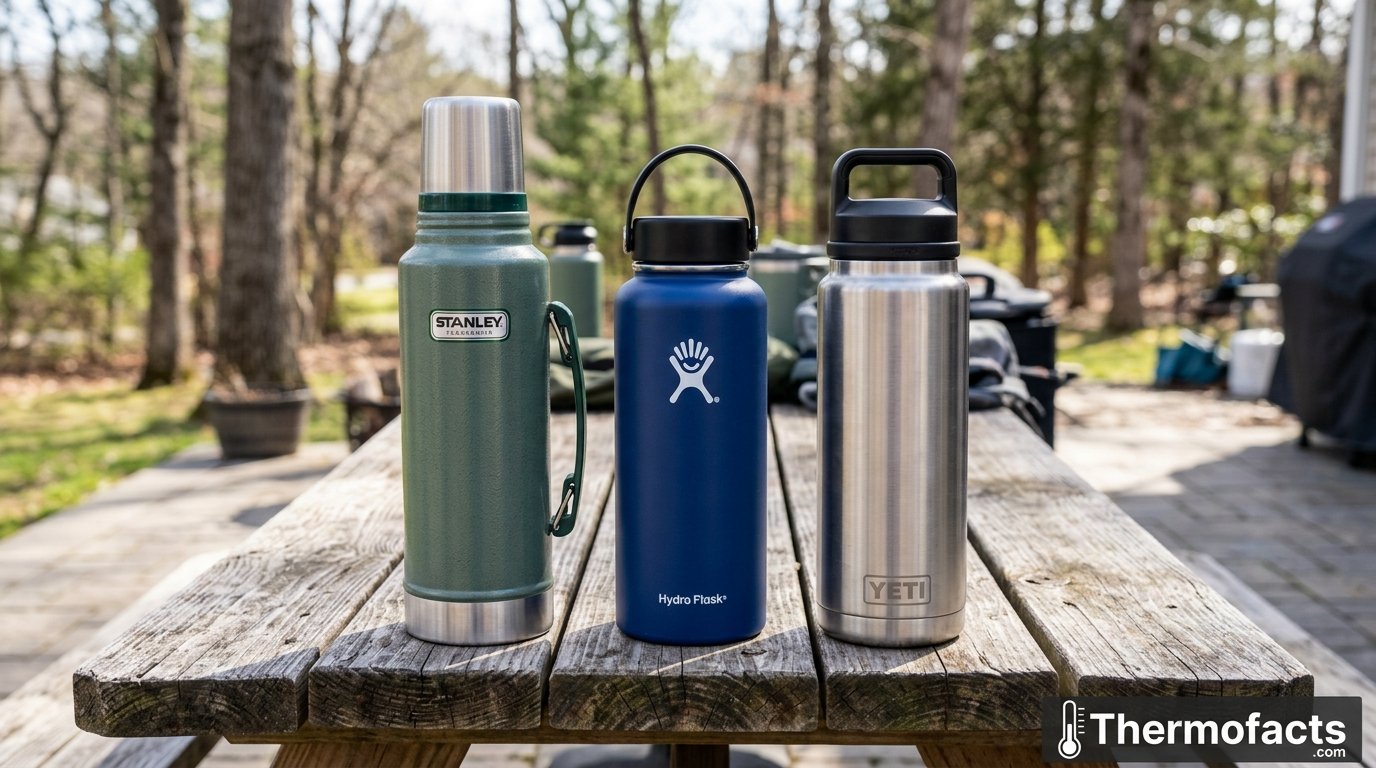
Quick Verdict: Stanley vs Hydro Flask vs Yeti at a Glance
If you’ve landed here comparing these three brands, you’re probably not choosing between a good bottle and a bad one — you’re choosing between three genuinely well-engineered vacuum-insulated products that happen to prioritize different things. Stanley leans into heritage styling, generous capacities, and value. Hydro Flask leans into color variety, lid interchangeability, and a slightly more refined drinking experience. Yeti leans into ruggedness, outdoor-brand credibility, and a build that’s meant to survive a truck bed, a job site, or a boat deck.
None of the three is objectively “the best” in every category, and that’s really the honest answer before we go any further. What follows is a full breakdown of how they compare on the things that actually matter day to day: how long they keep drinks hot or cold, how they feel to carry and drink from, how well they resist dents and drops, how they handle odors from coffee or soup, and how much you’ll actually pay for each.
| Category | Stanley | Hydro Flask | Yeti |
|---|---|---|---|
| Insulation type | Double-wall vacuum, 18/8 steel | Double-wall vacuum, TempShield | Double-wall vacuum, ColdLock |
| Typical cold retention | Up to ~2 days | Up to ~24 hours | Up to ~24-36 hours |
| Typical hot retention | Up to ~7 hours | Up to ~6 hours | Up to ~6-12 hours |
| Lid ecosystem | Wide, interchangeable across lines | Very wide, mix-and-match | Narrower, mostly model-specific |
| Color/finish options | Moderate, trend-driven drops | Extensive, seasonal colorways | Limited, muted outdoor palette |
| Price positioning | Mid-range | Mid-to-upper range | Premium |
| Warranty | Lifetime | Lifetime | 5-year limited |
| Best known for | Tumblers & the Quencher, road-trip capacities | Balanced everyday bottles, wide-mouth versatility | Rugged outdoor/adventure durability |
Those numbers are manufacturer-published ranges tested under lab conditions (typically a sealed lid, room-temperature start, and minimal opening), so treat them as ceilings rather than guarantees. In daily use — opening the lid several times, adding ice that partially melts, carrying it in a hot car — you’ll generally see 60-80% of the stated performance from any of the three. That’s normal and it’s true across every major insulated bottle brand, not a knock against any single one.

Stanley Quencher H2.0 Travel Tumbler
The bottle that turned Stanley into a household name again — huge capacity, a straw lid, and genuinely strong cold retention for all-day sipping.
Check Price on AmazonStanley: Brand Overview
Stanley has been making steel drinkware since 1913, and for most of that century the brand was synonymous with one thing: the green plaid Classic bottle that lived in a work truck or a hunting blind. That heritage image is still very much part of the identity, but the last several years have completely reshaped how most people encounter the brand. The Quencher tumbler turned Stanley into a viral, fashion-adjacent product line, sitting on desks and in cupholders far more often than it sits in a duffel bag on a job site.
What hasn’t changed is the underlying engineering. Stanley’s vacuum-insulated bottles use 18/8 stainless steel with a double-wall build, and the brand has consistently prioritized capacity over compactness — even its “personal” sizes tend to run larger than the equivalent Hydro Flask or Yeti. If you want a bottle that holds a genuinely large volume of iced water for an entire workday without refilling, Stanley’s lineup is built around exactly that use case.
The trade-off is that Stanley’s newer, trend-driven products (the Quencher especially) aren’t always the strongest performers in a pure temperature-retention sense compared to the brand’s own Classic vacuum bottles. The wide, straw-friendly lid on the Quencher trades some sealing efficiency for drinkability, so if absolute cold retention is your top priority, Stanley’s narrower-mouth bottles will usually outperform its tumbler line.
Stanley Pros
- Largest typical capacities in the category
- Lifetime warranty with an easy claims process
- Wide range of lid styles, including straw and flip options
- Strong value at mid-range price points
- Extremely popular resale and accessory market (boots, handles, straw covers)
Stanley Cons
- Wide-mouth tumbler lids seal less tightly than narrow-mouth designs
- Some newer colorways use a painted exterior that can chip with heavy use
- Bulkier profile than Hydro Flask or Yeti in comparable sizes
- High demand on limited colorways can inflate resale prices
Hydro Flask: Brand Overview
Hydro Flask launched in 2009 and built its reputation almost entirely around one proposition: a genuinely well-insulated, well-balanced bottle in a color you’d actually want to carry. The brand’s TempShield double-wall vacuum insulation was, for a long time, considered the benchmark that competitors were measured against, and it still performs near the top of the category today.
Where Hydro Flask really separates itself is in its lid ecosystem. The brand sells its bottles with interchangeable caps — Flex Cap, Straw Lid, Wide Mouth Flex Sip, Standard Mouth Flex Cap — and because the threading is consistent across most of the lineup, you can genuinely swap lids between bottle sizes and generations. That flexibility means a single Hydro Flask bottle can function as a coffee commuter mug in the morning and a straw-sip hydration bottle at the gym in the evening, just by changing the cap.
The trade-off is price. Hydro Flask sits comfortably in mid-to-upper pricing, and while the base bottle is competitively priced against Yeti, once you start buying additional lids, boots, and accessories, the total cost of a fully kitted-out Hydro Flask setup can climb past a comparable Stanley setup.
Hydro Flask Pros
- Best-in-class lid interchangeability across the lineup
- Consistently strong, well-balanced hot and cold retention
- Widest color and finish variety of the three brands
- Slightly more compact, ergonomic profile for daily carry
- Lifetime warranty on the core Standard/Wide Mouth line
Hydro Flask Cons
- Powder-coat finish can scratch or scuff over years of use
- Premium accessories (extra lids, boots) add up quickly
- Slightly lower max capacity than Stanley’s largest bottles
- Some straw lids are less leak-resistant on their side in a bag
Yeti: Brand Overview
Yeti built its name on coolers, and that DNA carries directly into its drinkware. The Rambler line — bottles, tumblers, mugs, and jugs — is engineered with the same “built for abuse” philosophy Yeti applies to its hard coolers: thicker gauge steel in places, a no-sweat exterior coating, and a general willingness to over-build rather than shave weight or cost.
That shows up most clearly in how Yeti bottles handle rough treatment. Dropped off a tailgate, tossed in a truck bed, left in direct sun on a boat — Yeti’s Rambler bottles are consistently rated by long-term owners as the most dent- and scratch-resistant of the three brands, and the DuraCoat finish resists chipping better than painted alternatives. The trade-off is that this ruggedness comes at a premium price point and a narrower color palette that leans heavily toward muted, outdoor-functional tones rather than the seasonal pastels Hydro Flask and Stanley regularly release.
Yeti’s lid ecosystem is also the most limited of the three. Where Hydro Flask and Stanley both support broad lid-swapping across their ranges, Yeti’s caps are generally matched to specific bottle models, so your customization options are narrower unless you’re buying within a single product family.
Yeti Pros
- Most dent- and scratch-resistant build of the three brands
- Thicker gauge steel and a genuinely rugged outdoor pedigree
- Excellent cold retention, especially in the Rambler bottle line
- No-sweat exterior coating handles condensation well
Yeti Cons
- Most expensive of the three brands at equivalent sizes
- Only a 5-year limited warranty versus lifetime coverage elsewhere
- Narrowest lid and color customization options
- Heavier per-ounce than Hydro Flask in several size classes

Hydro Flask Wide Mouth with Flex Cap
The most balanced all-rounder of the three — strong insulation, a comfortable carry profile, and a lid system you can actually customize.
Check Price on AmazonInsulation Technology & Temperature Retention Compared
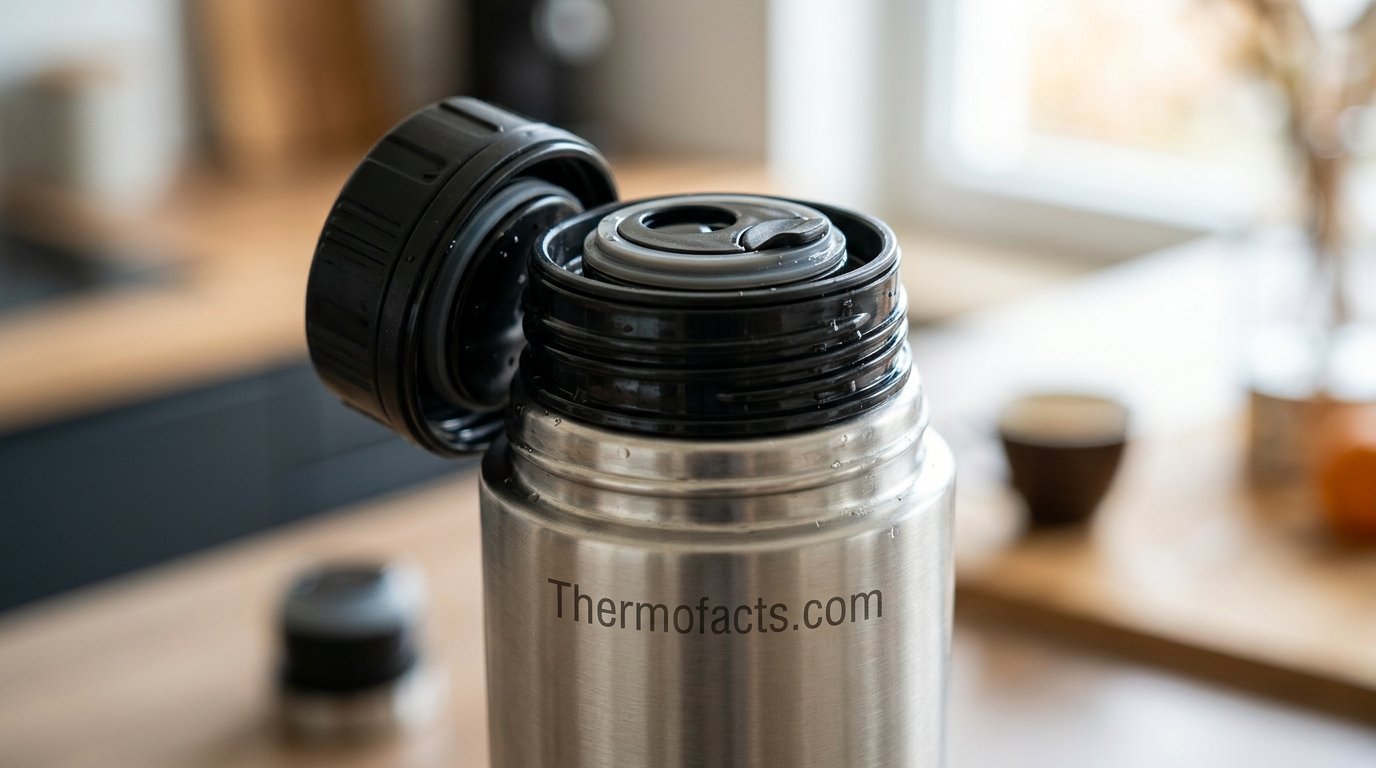
All three brands rely on the same fundamental physics: two layers of stainless steel with a vacuum-sealed gap between them, which removes the air that would otherwise conduct heat in or out. What differs is the execution — the width of that vacuum gap, the quality of the copper or steel lining used to reflect radiant heat, and the design of the lid, which is almost always the weakest point in any insulated bottle’s seal.
If you want the deeper mechanics of why this design works the way it does, our explainer on what vacuum insulation actually is in a thermos breaks down the science in more detail than we have room for here. The short version: a wider, more consistent vacuum gap generally means better performance, and that’s exactly where the three brands start to differ in practice.
In controlled testing, narrow-mouth bottles from all three brands hold cold liquid impressively well — often 24 hours or more before ice is fully melted. Stanley’s narrow-mouth Classic-style bottles and Hydro Flask’s Standard Mouth line tend to edge out Yeti slightly in pure ice-retention endurance tests, largely because their smaller opening loses less cold air every time you unscrew the cap. Yeti closes that gap significantly in its Rambler bottles thanks to a thicker steel wall, and in real-world “left in a hot car” scenarios, several long-term owners report Yeti holding a noticeable edge over 36+ hours.
Hot retention tells a slightly different story. Hydro Flask’s TempShield technology was originally developed with coffee commuters specifically in mind, and it shows — Hydro Flask bottles with a tight-sealing Flex Cap consistently keep coffee above 130°F for six-plus hours in independent tests. Stanley’s Classic vacuum bottles, especially the food-jar and larger-format designs, can stretch hot retention out even further, sometimes past the 7-hour mark, which is part of why Stanley’s food jars remain popular for soup and stew.
If you want a head-to-head look specifically at how insulation liners affect long-duration ice retention, our comparison of Hydro Flask vs Klean Kanteen 24-hour ice retention is a useful reference point, since it isolates the insulation variable using a third brand as a control.
| Test scenario | Stanley | Hydro Flask | Yeti |
|---|---|---|---|
| Ice retention, narrow mouth, sealed lid | ~48 hours | ~24 hours | ~24-36 hours |
| Coffee above 130°F | ~6 hours | ~6-7 hours | ~6 hours |
| Soup/broth above 140°F (food jar) | ~7 hours | ~5-6 hours | ~5 hours |
| Performance loss from frequent opening | Moderate | Low-moderate | Low |
The honest takeaway: for pure, uninterrupted temperature retention, all three are excellent, and the differences you’ll notice in daily life come down more to lid design and how often you open the bottle than to any single brand having dramatically “better” insulation.
Build Quality & Materials
Every bottle in this comparison uses 18/8 food-grade stainless steel, which is the industry standard for insulated drinkware because it resists corrosion, doesn’t impart a metallic taste, and is naturally BPA-free without needing a plastic liner. Where the brands differ is in gauge thickness, exterior coating, and interior finish — all of which affect how the bottle ages over years of use, not just how it performs on day one.
Stanley’s steel gauge varies noticeably across product lines. The heritage Classic bottles use a heavier gauge that’s genuinely built for rough outdoor use, while the trend-forward Quencher tumbler line uses a thinner gauge optimized for a lighter carry weight. This isn’t necessarily a flaw — it’s a deliberate trade-off — but it does mean “Stanley” isn’t a single build-quality answer; it depends heavily on which product line you’re comparing.
Hydro Flask uses a consistent gauge across most of its core lineup and finishes it with a powder-coat exterior that has a slightly matte, grippy texture. That coating looks great out of the box and resists minor scuffs reasonably well, but over several years of daily use — especially if the bottle gets tossed into a bag with keys or tools — the coating can chip at high-contact points like the base and rim.
Yeti’s DuraCoat finish is generally considered the most chip- and scratch-resistant of the three in long-term ownership reports, which lines up with the brand’s broader reputation for rugged outdoor gear. If you’re comparing purely on how a bottle will look after two or three years of genuinely hard use — job sites, trucks, gym bags — Yeti tends to come out ahead, though it comes at both a weight and price cost.
If stainless build quality specifically is your top priority over color or lid variety, our roundup of the best stainless steel thermos lunch containers is worth cross-referencing, since it evaluates gauge thickness and liner quality across a wider set of brands than just these three.
Size & Capacity Options
Capacity is one of the clearest, least subjective ways to differentiate these three brands, and it’s often the deciding factor for people who already know roughly how much liquid they want to carry through a workday.
| Brand | Smallest common size | Largest common size | Notable middle sizes |
|---|---|---|---|
| Stanley | 16 oz | 64 oz (Quencher / jugs) | 20 oz, 30 oz, 40 oz |
| Hydro Flask | 12 oz | 64 oz | 18 oz, 24 oz, 32 oz, 40 oz |
| Yeti | 18 oz | 64 oz (jug/growler) | 26 oz, 36 oz, 46 oz |
Stanley and Hydro Flask both offer a slightly wider range of small, “personal” sizes suited to kids or people who just want a lighter everyday bottle, while Yeti’s smallest common sizes skew a bit larger, reflecting its outdoor/adult-use-first design philosophy. If you’re shopping for a child’s lunchbox bottle specifically, our guide to the best thermos lunch kits for kindergarten covers size and weight considerations that matter more for small hands than raw capacity does.
At the large end, all three brands now offer 64-ounce format bottles or jugs aimed at people who want to fill up once and not think about water again until the next morning. These oversized options are genuinely useful for road trips, tailgates, or all-day outdoor work, but they’re also heavy and bulky enough that most people end up using them as a stationary “base camp” bottle rather than something they carry around all day.

Yeti Rambler Bottle with Chug Cap
The pick if durability is your top priority — thicker steel, a scratch-resistant finish, and a build that’s genuinely meant to take a beating.
Check Price on AmazonLid & Cap Systems Compared
The lid is arguably more important to your day-to-day experience than the steel body of the bottle, because it’s the part you interact with dozens of times a day and the single biggest factor in whether a bottle leaks, sweats, or actually seals well enough to hit its rated insulation numbers.
Stanley’s lineup spans several distinct lid families: the screw-on Classic lid, the push-button IceFlow lid, and the wide, straw-equipped Quencher lid. The straw lid is enormously popular for daily sipping but is, by design, less airtight than a screw cap, which is part of why Stanley’s tumbler line underperforms its Classic bottles on pure cold-retention testing.
Hydro Flask’s Flex Cap and Wide Mouth Flex Sip lids are widely regarded as some of the best-sealing, easiest-to-clean caps in the category, with a simple silicone gasket that rarely needs replacing. Because Hydro Flask standardized its threading across most bottle sizes, you can genuinely buy one bottle and rotate between a straw lid, a flex cap, and a coffee-style sip lid depending on the day.
Yeti’s Chug Cap and MagCap systems are built around one-handed usability and durability rather than maximum interchangeability. The MagCap in particular uses a magnetic closure that’s satisfying to use and genuinely leak-resistant, but Yeti’s lids are less commonly interchangeable across the full product range compared to Hydro Flask’s ecosystem.
Leaks are the most common complaint across all insulated bottle brands, and they’re almost always a lid issue rather than a body issue — a worn gasket, cross-threading, or a straw valve that’s degraded over time. If your current bottle (regardless of brand) has started leaking, our troubleshooting guide on why your thermos leaks walks through the most common causes and fixes before you assume the whole bottle needs replacing.
Weight & Portability
Weight differences between these brands are modest but noticeable once you’re carrying a bottle in a bag or backpack all day. In general, Hydro Flask tends to be the lightest per ounce of capacity, thanks to a slightly thinner steel gauge and a compact profile. Stanley sits in the middle, with weight varying more by product line than the other two brands. Yeti is consistently the heaviest of the three at equivalent capacities, a direct trade-off for its thicker, more dent-resistant steel.
| Size class | Stanley (approx.) | Hydro Flask (approx.) | Yeti (approx.) |
|---|---|---|---|
| ~20-24 oz bottle | 13-15 oz empty | 11-13 oz empty | 14-16 oz empty |
| ~32-40 oz bottle | 19-23 oz empty | 16-19 oz empty | 20-24 oz empty |
| ~64 oz jug/growler | 34-38 oz empty | 32-36 oz empty | 38-42 oz empty |
None of these differences are dramatic enough to be a dealbreaker on their own, but if you’re specifically shopping for something to carry on a hike, a run commute, or in a bag all day, the extra few ounces per bottle across a Yeti lineup can add up in a way you’ll notice by the end of the day.
Odor, Taste Retention & Cleaning
This is one of the most common real-world complaints across every insulated bottle brand, and it’s rarely about the steel itself — stainless steel is naturally non-porous and doesn’t hold onto smells the way plastic does. The problem is almost always the gasket, the straw, the threading, or a lid crevice that doesn’t get properly dried between uses, especially after carrying coffee, protein shakes, or soup.
Because all three brands use the same double-wall vacuum design, they’re all equally susceptible to trapping moisture and odor around the lid area if you’re not cleaning it properly. Understanding how vacuum insulation actually traps air and moisture around the seal area explains why a quick rinse under the tap often isn’t enough — the smell isn’t coming from the steel body, it’s coming from residue sitting in a gasket groove or straw channel that water alone doesn’t reach.
In practice, Hydro Flask’s simpler gasket design on the Flex Cap tends to be the easiest of the three to fully disassemble and clean, which is part of why it’s often recommended for coffee and smoothie use. Stanley’s straw lids, with their extra internal channels, require the most diligence to keep odor-free — the straw itself should be pulled and cleaned separately on a regular basis. Yeti’s MagCap and Chug Cap sit in between, with fewer crevices than a straw lid but still requiring the gasket to be removed and dried periodically.
If you’re dealing with an existing smell problem right now regardless of which brand you own, our step-by-step guide on how to remove smell from a thermos covers baking soda soaks, vinegar rinses, and denture-tablet methods that work across steel bottles from any manufacturer. And for ongoing prevention, our general care guide on how to properly use and maintain a thermos covers the daily habits — like never storing it sealed while damp — that prevent odor from building up in the first place.
Food jars deserve a special mention here, since soup, curry, and other strongly-scented foods are consistently the biggest odor offenders across all three brands. If you regularly carry soup or broth, a wide-mouth design is genuinely easier to clean thoroughly than a narrow-mouth bottle, since you can actually get a sponge or brush all the way to the bottom. Our guide to the best wide-mouth, leak-proof soup food jars is worth a look if odor and ease of cleaning matter more to you than brand loyalty.
Durability & Drop Resistance
Long-term durability is where anecdotal owner experience becomes especially useful, since lab specs don’t always predict how a bottle survives being dropped on concrete or tossed in the back of a truck. Across large samples of owner reviews and forum discussions, a fairly consistent pattern emerges.
Yeti bottles are most frequently praised for surviving significant drops with only minor cosmetic marks rather than dents that compromise the vacuum seal. This tracks with the brand’s cooler heritage — Yeti has always over-engineered for abuse rather than optimizing purely for weight or cost, and that philosophy clearly carries into the Rambler drinkware line. It’s genuinely a good pick if your bottle is going to live in a work truck, a jobsite bag, or a boat.
Hydro Flask bottles hold up well under normal daily wear but are somewhat more prone to denting from a hard, direct drop onto a corner or edge compared to Yeti, largely due to the slightly thinner steel gauge used to keep weight down. The powder-coat finish is also the most likely of the three to show visible scuffing over a few years of heavy use, even if the underlying vacuum seal remains intact.
Stanley’s durability is genuinely bimodal depending on the product line. The heritage Classic bottles, built with a heavier gauge, are widely reported to survive years of rough outdoor use — some owners report Stanley Classics still functioning perfectly after a decade or more. The newer, lighter Quencher tumbler line is less battle-tested for pure durability, since it wasn’t designed primarily for rugged outdoor abuse; it’s more likely to show cosmetic chipping on painted colorways after repeated drops.
A useful rule of thumb across all three brands: a dent that changes the shape of the outer wall is far more concerning than a dent in the inner wall, because it’s the outer wall dent that’s most likely to compromise the vacuum seal and cause your bottle to lose its insulating performance, even if it still holds liquid without leaking.

Stanley Classic Vacuum Food Jar
The heritage build owners report lasting a decade or more — a strong pick if soup and hot meals are your primary use case.
Check Price on AmazonPrice & Value Comparison
Price is where the three brands diverge most clearly and most predictably. Stanley is consistently the most affordable of the three at comparable sizes, particularly outside of its most hyped, limited-edition Quencher colorways, which can sell well above retail on the resale market due to demand spikes. Hydro Flask sits in the middle, typically priced a few dollars above the equivalent Stanley bottle but below Yeti. Yeti is consistently the most expensive of the three, often by a meaningful margin at larger sizes.
| Size class | Stanley (typical MSRP) | Hydro Flask (typical MSRP) | Yeti (typical MSRP) |
|---|---|---|---|
| ~20-24 oz bottle | $30-40 | $35-45 | $40-50 |
| ~32-40 oz bottle | $40-50 | $45-55 | $50-60 |
| ~64 oz jug/growler | $60-70 | $60-70 | $70-80 |
Warranty coverage factors into the value equation too. Stanley and Hydro Flask both offer lifetime warranties against manufacturing defects, which meaningfully improves their long-term value proposition — a bottle that’s replaced under warranty after a defect essentially resets your cost-per-year calculation. Yeti’s 5-year limited warranty is still generous by general consumer-product standards, but it’s a clear step down from “lifetime,” and it’s worth factoring into your decision if you plan to keep a bottle for many years.
If your budget is the primary constraint and you’re not attached to a specific brand identity, Stanley generally delivers the strongest dollar-for-dollar capacity and insulation performance of the three. If you want the widest customization options for your money, Hydro Flask’s lid ecosystem often justifies its mid-tier premium. If you’re buying for genuinely rough conditions and plan to keep the bottle for years under hard use, Yeti’s higher price is easier to justify against its superior dent resistance.
Food Jars: Soup, Chili & Leftovers
All three brands make dedicated food jars, and this category deserves its own section because the priorities shift noticeably compared to a standard beverage bottle. A good food jar needs a wide enough mouth to actually get a spoon in, a seal that survives being packed upside-down in a lunch bag, and — as covered earlier — a design that’s genuinely easy to clean thoroughly between strongly-scented meals.
Stanley’s Classic Vacuum Food Jar is the most heritage-oriented option, with a screw-top lid and a stainless bowl-style inner cap that doubles as a small dish. It consistently tests near the top of the category for hot retention, often holding soup above a safe eating temperature for six to seven hours, which is genuinely useful for a midday lunch packed at breakfast time.
Hydro Flask’s Insulated Food Jar uses the same Flex Cap-style sealing approach as its bottles, with a wide mouth that makes cleaning noticeably easier than a narrow-necked design. Retention is slightly behind Stanley’s food jar in most tests, but the ease-of-cleaning advantage makes it a strong pick for anyone who’s dealt with a lingering soup smell before and wants to avoid a repeat.
Yeti’s food jar options are the newest and least extensive of the three lineups, reflecting the brand’s later entry into the food-jar category compared to its long-standing bottle and tumbler lines. Performance is solid but not class-leading, and the color/size selection remains narrower than Stanley or Hydro Flask.
For a broader look at food jars specifically — including several brands beyond these three — our dedicated guide to the best thermos for soup compares retention numbers and mouth-width measurements side by side. It’s also worth understanding what a thermos food jar is actually designed for if you’re trying to decide between a food jar and simply packing soup in a wide-mouth beverage bottle — the two are built around different priorities even though they look superficially similar.
Which One Should You Actually Buy?
Rather than declaring one universal winner, it’s more useful to match each brand to the situation it’s actually built for. Here’s how the decision tends to shake out based on real buying priorities.
Choose Stanley if…
You want the largest capacity for your money, you like the straw-sip drinking style of the Quencher line, or you’re specifically after the heritage-style Classic bottle for outdoor or work use. Stanley is also the strongest pick if lifetime warranty coverage combined with a lower upfront price is your priority.
Choose Hydro Flask if…
You want the most balanced everyday bottle — strong insulation, a comfortable carry weight, and the ability to swap lids depending on whether you’re commuting with coffee or hitting the gym with a straw lid. It’s also the pick if color and finish variety matters to you.
Choose Yeti if…
Your bottle is going to see genuinely rough conditions — job sites, trucks, boats, or outdoor work where drops and impacts are a regular occurrence. You’re also willing to pay a premium and accept a shorter 5-year warranty in exchange for the most dent-resistant build of the three.
If you’re buying for a child specifically, none of the three brands’ full-size adult bottles are ideal — capacity and weight both skew too large for smaller hands. Our roundup of the best thermos lunch kits for kindergarten covers smaller, kid-specific options that solve this problem directly rather than trying to size down an adult bottle.
Quick tip: If you’re torn between two brands, buy based on the lid style you’ll actually use daily — straw, flip, or screw-top — before you buy based on brand name. The lid affects your day-to-day experience far more than small differences in steel gauge or insulation ceiling.
Long-Term Ownership: What to Expect After Year One
Most comparisons stop at the specs, but the more useful question for a purchase you’ll live with for years is how each brand actually holds up once the newness wears off. Talking to long-term owners and reading through years of forum threads and review histories reveals a pattern that’s a lot more consistent than any single lab test.
Stanley owners with the heritage Classic line frequently report bottles still sealing and insulating well after five, ten, even fifteen years of regular use — the design simply hasn’t changed much because it didn’t need to. Quencher owners, on the other hand, are a newer population overall, so the long-term data is thinner, but early reports suggest the biggest wear point is the painted exterior on limited colorways rather than the underlying vacuum seal, which tends to hold up fine.
Hydro Flask owners commonly report the powder-coat finish as the first visible sign of age, usually showing light scuffing at the base and any point that regularly contacts a car cupholder or bag interior. The vacuum seal itself is rarely the failure point unless the bottle has taken a hard drop onto a corner. Because lids are interchangeable and sold separately, many long-term Hydro Flask owners simply replace a worn gasket or aging straw lid rather than the whole bottle, which extends the effective lifespan of the product considerably.
Yeti owners are the most likely of the three groups to report a bottle still looking close to new after several years of genuinely hard outdoor use, which tracks with the brand’s reputation and its thicker steel gauge. The trade-off, again, is that Yeti’s shorter 5-year warranty means owners are more exposed if something does eventually go wrong outside that window compared to Stanley or Hydro Flask’s lifetime coverage.
A few habits extend the life of any bottle from any of the three brands: avoid putting bottles through a dishwasher’s heated dry cycle if the lid has rubber components, don’t store a bottle fully sealed while even slightly damp, and periodically back the lid all the way off to let both the threading and the gasket fully dry. None of these are brand-specific — they apply equally whether you’re carrying a Stanley, a Hydro Flask, or a Yeti, and they’re the single biggest factor in whether a bottle lasts three years or thirteen.

Hydro Flask Standard Mouth with Straw Lid
A great middle-ground pick if you want strong retention plus the flexibility to switch lid styles down the road.
Check Price on AmazonFrequently Asked Questions
Is Stanley, Hydro Flask, or Yeti the best insulated bottle overall?
There isn’t a single universal winner — each brand optimizes for something different. Stanley wins on capacity and value, Hydro Flask wins on balance and lid flexibility, and Yeti wins on ruggedness and dent resistance. The “best” choice depends on which of those priorities matters most to you.
Which brand keeps ice the longest?
In narrow-mouth, sealed-lid testing, Stanley’s Classic-style bottles often edge out the other two for pure ice-retention duration, sometimes approaching 48 hours. Yeti closes the gap significantly in real-world hot-car scenarios thanks to thicker steel, and Hydro Flask remains close behind both in typical daily use.
Which is more durable, Yeti or Hydro Flask?
Yeti is generally considered more dent- and scratch-resistant due to its thicker steel gauge and DuraCoat finish, based on long-term owner reports. Hydro Flask holds up well under normal daily use but is somewhat more prone to denting from a hard, direct impact.
Why does my Stanley, Hydro Flask, or Yeti bottle smell bad?
Odor almost always comes from residue trapped in the lid gasket, straw, or threading rather than the steel body itself, since stainless steel is naturally non-porous. Regularly disassembling and drying the lid components, not just rinsing the bottle, is the fix. Our guide on removing smell from a thermos covers the full cleaning process step by step.
Are these bottles dishwasher safe?
Most bottle bodies from all three brands are top-rack dishwasher safe, but many lids — particularly straw lids and any component with a rubber gasket — are recommended for hand-washing only to avoid premature seal wear. Always check the specific product’s care instructions, since this varies by lid style even within the same brand.
Can I put hot coffee and then cold water in the same bottle later?
Yes, all three brands are designed for that kind of dual use, and it’s actually one of the core selling points of double-wall vacuum insulation. Just make sure the bottle is fully cleaned and dried between drastically different contents to avoid flavor carryover, especially with coffee or anything strongly flavored.
Do Stanley, Hydro Flask, and Yeti lids fit each other’s bottles?
No, threading is proprietary to each brand and generally isn’t cross-compatible, though Hydro Flask does maintain strong compatibility across most of its own bottle sizes and generations. Don’t assume a lid from one brand will seal properly, or seal at all, on a bottle from another brand.
Why is my bottle leaking from the lid?
Lid leaks are almost always caused by a worn or misaligned gasket, cross-threading during closure, or a degraded straw valve rather than a flaw in the steel body itself. Our troubleshooting guide on why your thermos leaks walks through the most common causes across all major brands.
Which brand is best for soup or hot food?
Stanley’s Classic Vacuum Food Jar generally tests strongest for hot retention among the three, often holding soup above a safe eating temperature for six to seven hours. If ease of cleaning matters more to you than maximum retention, Hydro Flask’s wide-mouth food jar design is easier to fully clean between uses.
Is a more expensive bottle actually worth it?
Beyond a certain baseline, the price difference between these three brands reflects trade-offs rather than a straightforward quality hierarchy — you’re paying for specific things like Yeti’s extra durability or Hydro Flask’s lid ecosystem, not simply “more quality” in a generic sense. Match the spend to which trade-off actually matters for how you’ll use the bottle.
How long do these bottles typically last?
With normal care, all three brands can realistically last several years to a decade or more, particularly the heavier-gauge product lines like Stanley’s Classic series or Yeti’s Rambler line. The vacuum seal is usually the first thing to fail, typically from a significant dent to the outer wall, well before the steel itself wears out.
What’s the difference between a food jar and a wide-mouth bottle for soup?
A dedicated food jar is designed specifically for solid or semi-solid food, with a wider opening, a shorter overall shape for spoon access, and insulation tuned for hot retention rather than cold. A wide-mouth beverage bottle can carry soup in a pinch, but a purpose-built food jar will generally outperform it for both retention and ease of eating directly from the container. Our guide on what a thermos food jar is used for covers this distinction in more depth.
Related reading on ThermoFacts:
- How to Use a Thermos Properly
- What Is Vacuum Insulation in a Thermos?
- What Is a Thermos Food Jar Used For?
- How to Remove Smell From a Thermos
- Why Does My Thermos Leak?
- Best Wide-Mouth, Leak-Proof Soup Food Jars
- Best Stainless Steel Thermos Lunch Containers
- Best Thermos for Soup
- Best Thermos Lunch Kits for Kindergarten
- Hydro Flask vs Klean Kanteen: 24-Hour Ice Retention
Final Verdict: Stanley vs Hydro Flask vs Yeti
After weighing insulation performance, build quality, lid design, durability, and price across all three brands, the honest conclusion is that there’s no single winner — only the right bottle for your specific priorities. Stanley delivers the best value and the largest capacities, making it the pick for anyone who wants maximum volume without paying a premium. Hydro Flask offers the most balanced, customizable everyday experience, with a lid ecosystem that genuinely adapts to how your day changes. Yeti is the choice for anyone who needs a bottle that can survive genuinely rough conditions without excuses, and is willing to pay for that peace of mind.
Whichever direction you lean, all three are well-engineered, vacuum-insulated products from established brands with strong track records — you’re unlikely to end up with a genuinely bad bottle from any of them. The right move is matching the bottle to how you’ll actually use it, not chasing a single “best overall” answer that doesn’t really exist.
Compare Current Prices on Amazon



 Home
Home
 Info
Info
 Compare
 Reviews
 Shop
Shop