

5 Critical Signs of a Bad Thermostat in a Car (Diagnostics & Fixes)
It is a small component, often costing less than $20, but the thermostat is the gatekeeper of your engine’s health. When it fails, it can lead to catastrophic engine damage or frustrating performance issues. If your temperature gauge is acting erratically or your heater is blowing cold air in winter, you are likely dealing with a stuck thermostat.
As experts in thermal dynamics and automotive cooling systems, we have broken down the mechanical symptoms, the physics behind them, and how to verify the issue without buying expensive tools. Whether you are running a standard daily driver or a performance vehicle, understanding the difference between a 180°F and 195°F thermostat is crucial for your engine’s longevity.
⚡ Quick Answer: What are the signs of a bad car thermostat?
The most common symptoms include:
- Engine Overheating: The thermostat is stuck closed, trapping hot coolant in the engine block.
- Engine Running Too Cool: The thermostat is stuck open, allowing coolant to flow constantly.
- Fluctuating Temperature Gauge: The valve is “fluttering” or sticking intermittently.
- No Heat from Cabin Vents: A stuck-open thermostat prevents the engine from warming up enough to provide cabin heat.
- Coolant Leaks: Leaking from the thermostat housing gasket due to pressure buildup.
1. The Engine Overheating (Stuck Closed)
This is the most dangerous scenario. The thermostat’s job is to block coolant flow until the engine reaches its operating temperature (usually around 195°F). Once hot, it opens to let coolant flow to the radiator. If it gets stuck closed, that hot coolant is trapped. Your temperature gauge will spike into the red zone within 10-15 minutes of driving.
2. The Engine Runs Cold (Stuck Open)
This is less destructive immediately but bad for efficiency. If the thermostat fails in the open position, coolant flows to the radiator immediately. The engine never reaches its optimal operating temperature. You will notice poor fuel economy, higher emissions, and unburnt fuel dilution in your oil.
This symptom is often confused with choosing the wrong thermostat rating. Read our guide on 160 vs 180 thermostats to understand why running too cool is bad for modern engines.
3. Erratic Temperature Fluctuations
Does your temperature needle dance? If it drops suddenly on the highway and spikes when you stop at a red light, your thermostat might be sticking. It’s struggling to find the equilibrium point, causing “thermal shock” to the cooling system components.
4. The “Hose Test” (DIY Diagnostics)
You don’t need a computer to diagnose this. You can perform a simple touch test (carefully!).
How to Perform the Hose Test:
- Start the engine from cold.
- Open the hood and locate the upper and lower radiator hoses.
- Carefully touch the hoses (be mindful of moving fan blades).
- Healthy Result: One hose should get hot gradually, and the other should stay cool until the thermostat opens (around 195°F), then suddenly get hot.
- Bad Thermostat: If both get warm immediately (Stuck Open) or one stays stone cold while the engine overheats (Stuck Closed), you have found your culprit.
Watch this video for a visual walkthrough of diagnosing cooling system issues.
Comparison: Stuck Open vs. Stuck Closed
| Symptom | Stuck Open | Stuck Closed |
|---|---|---|
| Temp Gauge | Stays Low (C) | Spikes to High (H) |
| Cabin Heat | Lukewarm / Cold | Hot (initially) then Overheat |
| Risk Level | Moderate (Long term wear) | Critical (Immediate failure) |
| Fuel Economy | Poor (Rich mixture) | Normal (until failure) |
How a Car Thermostat Actually Works
To understand why a thermostat fails the way it does, it helps to know what is happening inside that small brass or plastic housing. Most vehicles use a wax pellet thermostat. Inside the valve sits a sealed capsule packed with a wax compound that has a very specific and predictable melting point, usually engineered to liquefy right around 195°F. As the wax heats up, it expands dramatically in volume, pushing a rod that forces the valve open. As the engine cools, the wax contracts, a spring pulls the valve shut again, and the cycle repeats for the life of the vehicle.
This simple mechanical process is elegant because it requires no electrical input and reacts directly to the coolant temperature surrounding it. But it also means the thermostat is at the mercy of the coolant’s cleanliness. Contaminated, old, or improperly mixed coolant leaves mineral deposits and corrosion byproducts that coat the wax pellet and the valve seat, which is the single biggest reason thermostats eventually stick.
The thermostat sits at a critical junction between the engine block, the upper radiator hose, and in most layouts, the water pump inlet. When closed, it forces coolant to recirculate only within the engine and the heater core loop, allowing the block to warm up quickly. Once the wax pellet reaches its trigger temperature, the valve lifts off its seat and coolant is allowed to travel out to the radiator, where the airflow through the fins pulls heat out of the fluid before it returns to the engine. This constant open-close cycling, sometimes called “thermostat modulation,” is why a healthy gauge needle should hover in a narrow band rather than sitting perfectly still.
Types of Car Thermostats: Wax, Electronic, and Variable
Not every thermostat behaves identically, and knowing which type your vehicle uses changes how you diagnose a fault and what replacement part you should buy.
| Type | How It Works | Common In | Failure Tendency |
|---|---|---|---|
| Wax Pellet (Mechanical) | Passive wax capsule expands and contracts with coolant temperature | Most economy and mid-size vehicles | Sticks closed from mineral buildup; spring fatigue over time |
| Electronic (Map-Controlled) | ECU adjusts the opening point using a heating element around the wax pellet | Many modern turbocharged and direct-injection engines | Wiring or heating-element failure in addition to mechanical sticking |
| Variable / Dual-Stage | Two-stage valve that opens partially, then fully, for more precise temperature control | Performance and some hybrid platforms | More complex seals; more expensive to replace |
Electronic thermostats are increasingly common because they let the engine’s computer hold the coolant slightly cooler under heavy load, such as towing or aggressive driving, to reduce the risk of detonation, then let the engine run warmer during light cruising to minimize emissions. If your vehicle uses this style, a scan tool that can read live coolant temperature data alongside commanded thermostat position is often more useful than the hose test alone, because a wiring fault can mimic a mechanically stuck valve.
What Causes a Thermostat to Fail in the First Place
A thermostat rarely fails without a reason. Understanding the root cause helps you prevent a repeat failure after you install a new one.
- Mineral and rust buildup: Old coolant, tap water instead of distilled water, or a coolant type mismatch leaves scale on the valve and seat, preventing it from seating or opening cleanly.
- Spring fatigue: The return spring loses tension after years of heat cycling, causing the valve to open too easily or fail to snap shut.
- Wax pellet degradation: The wax compound itself can break down or the rubber diaphragm sealing it can crack, letting coolant seep in and ruining the expansion characteristics.
- Debris in the cooling system: Sediment from a failed water pump, degraded radiator, or old hose material can lodge in the valve and physically block it from closing.
- Air pockets: A cooling system that was not properly bled after a coolant flush can trap air near the thermostat, causing it to run hotter than it senses and open erratically.
- Corrosion from mixed coolant types: Combining incompatible coolant chemistries (for example, an older green coolant with a modern extended-life orange or pink formula) can accelerate corrosion of the thermostat housing and valve.
Because most of these causes trace back to coolant quality, the single best preventive step you can take is flushing the cooling system on the manufacturer’s recommended interval and always topping off with the correct coolant type mixed to the proper ratio with distilled water.
More Warning Signs You Might Be Missing
Beyond the five core symptoms, there are several secondary clues that point to a failing thermostat, especially in the early stages before the gauge shows anything dramatic.
High or Unstable Idle
Because your engine control unit uses coolant temperature as one of its primary inputs for calculating idle speed and fuel trim, a thermostat that reports the wrong temperature (or that keeps the engine running too cold) can cause a noticeably higher idle, especially right after startup, that never settles down the way it should.
Unusual Thumping or Gurgling Noises
When superheated coolant trapped by a stuck-closed thermostat suddenly mixes with cooler fluid once the valve finally releases, the rapid temperature change can create a thumping or knocking sound from the engine bay, sometimes mistaken for a rod knock. A gurgling noise from the dashboard vents or under the hood often points to trapped air combined with an inconsistent thermostat cycle.
Reduced or Inconsistent Air Conditioning Performance
An engine running too hot from a stuck-closed thermostat forces the AC compressor to work harder against a hotter engine bay and can trigger the system to cycle the compressor off to protect the engine, leaving you with warm air blowing from the vents at exactly the moment you need it most.
Sweet Smell or Visible Steam
A sweet, slightly syrupy smell in the cabin or from under the hood is a telltale sign of coolant vapor, which shows up once internal pressure from a stuck-closed thermostat forces fluid past a weakened cap or hose. Visible white steam rising from under the hood, especially paired with a rising temperature gauge, means you should stop driving immediately.
Check Engine Light and OBD-II Codes Related to the Thermostat
Modern vehicles monitor coolant temperature behavior closely enough that a failing thermostat will frequently trigger a diagnostic trouble code long before the gauge shows a problem. If your check engine light comes on, a code reader can narrow things down quickly.
| Code | Description | Typical Cause |
|---|---|---|
| P0128 | Coolant Thermostat Below Regulating Temperature | Thermostat stuck open, allowing the engine to run too cool |
| P0125 | Insufficient Coolant Temperature for Closed Loop Fuel Control | Engine taking too long to warm up, often a stuck-open thermostat |
| P0116 | Engine Coolant Temperature Sensor Circuit Range/Performance | Can mimic thermostat symptoms; worth ruling out the sensor separately |
| P0480 / P0481 | Cooling Fan Control Circuit | Related fan issues that can compound overheating from a stuck-closed thermostat |
It is worth noting that P0128 is the single most common thermostat-related code logged on OBD-II scanners, and it specifically points to the engine failing to reach operating temperature within an expected window after startup, which almost always means the valve is stuck open or not closing fully.
The Boil Test: A More Precise DIY Diagnostic
If the hose test leaves you uncertain, or if you have already pulled the thermostat out for inspection, the boil test gives you a definitive answer about whether the part itself is bad, independent of the rest of the cooling system.
How to Perform the Boil Test:
- Remove the thermostat from the housing and rinse off any old coolant or gasket material.
- Fill a small pot with water and suspend the thermostat inside using a piece of wire so it does not touch the bottom of the pot directly.
- Place a cooking thermometer in the water alongside the thermostat.
- Heat the water gradually on the stove while watching both the thermometer and the valve.
- Healthy Result: The valve should begin to open as the water approaches its rated temperature (commonly printed on the thermostat body) and should be fully open a few degrees past that point.
- Bad Thermostat: If the valve never opens, opens far too early, or opens at a temperature significantly different from its printed rating, the part has failed and should be replaced.
Thermostat Failure vs. Other Cooling System Problems
Several other cooling system failures produce symptoms that overlap heavily with a bad thermostat, and misdiagnosing the problem means you might replace the wrong $20 part while the real issue keeps damaging your engine.
| Component | Overlapping Symptom | Key Difference |
|---|---|---|
| Water Pump | Overheating, especially at highway speed | Often accompanied by a whining or grinding noise from the pump bearing, and sometimes visible coolant weeping from the pump’s weep hole |
| Radiator Cap | Overheating and coolant loss without a visible leak | A failed cap cannot hold system pressure, lowering the coolant’s boiling point; a pressure tester on the cap alone will confirm this |
| Head Gasket | Overheating, white exhaust smoke, milky oil | Combustion gases leak into the cooling system, which a chemical block tester or bubble test at the radiator neck will detect |
| Coolant Temperature Sensor | Erratic gauge readings, poor fuel economy, warm-up related codes | The engine’s actual temperature (checked with an infrared thermometer on the housing) does not match what the gauge or scan tool reports |
| Cooling Fan | Overheating that worsens in stop-and-go traffic or while idling | Overheating improves once you get moving and airflow increases, unlike a stuck-closed thermostat which overheats regardless of road speed |
A useful rule of thumb: if overheating happens consistently regardless of speed, idle, or load, suspect the thermostat first, since it is the cheapest and most common failure point. If the pattern changes with driving conditions, broaden your inspection to the water pump, fan, and radiator before assuming the thermostat is at fault.
Cost to Replace a Car Thermostat
One of the most encouraging facts about thermostat failures is how inexpensive the fix usually is compared to the damage it can prevent.
| Vehicle Class | Parts Cost (Thermostat + Gasket) | Typical Labor (Shop) | DIY Total |
|---|---|---|---|
| Economy Sedan | $10 – $25 | 0.5 – 1 hour | $15 – $30 |
| Mid-Size / Crossover | $15 – $35 | 1 – 1.5 hours | $20 – $40 |
| Truck / SUV | $20 – $45 | 1 – 2 hours | $25 – $55 |
| Luxury / Performance | $40 – $120+ | 2 – 4 hours (often buried behind the intake) | $50 – $150+ |
The wide labor range on luxury and performance vehicles usually comes down to accessibility. On many transverse-mounted V6 engines, the thermostat housing sits underneath the intake manifold, which means a shop has to budget significantly more time even though the part itself is still inexpensive. This is exactly the kind of job where getting a quote before authorizing the work pays off, since labor, not parts, drives the final bill.
Step-by-Step DIY Thermostat Replacement
Replacing a thermostat is one of the more approachable DIY cooling system jobs, typically requiring only basic hand tools.
Tools and Supplies You Will Need:
- New thermostat matched to your vehicle’s specified opening temperature
- New gasket or O-ring (never reuse the old one)
- Correct coolant type for your vehicle, mixed to the proper ratio
- Basic socket set and a flathead screwdriver
- Drain pan large enough to catch several quarts of coolant
- Shop towels and a funnel
Replacement Steps:
- Let the engine cool completely. Never open a cooling system while the engine is hot; residual pressure can cause severe burns.
- Drain the coolant into a pan by opening the radiator drain petcock or removing the lower radiator hose, depending on your vehicle.
- Locate the thermostat housing, typically where the upper radiator hose meets the engine, and remove the retaining bolts.
- Remove the old thermostat and gasket, noting the orientation of the valve, which is usually spring-side facing into the engine.
- Clean the housing surface thoroughly to ensure a leak-free seal with the new gasket.
- Install the new thermostat in the correct orientation with a fresh gasket, then torque the housing bolts evenly to the manufacturer’s specification to avoid warping the housing.
- Refill the cooling system with the correct coolant mixture, and be sure to open any bleeder valves to purge trapped air pockets.
- Start the engine and monitor the gauge, watching for the temperature to rise smoothly to normal operating range and confirming there are no leaks around the new gasket.
- Recheck the coolant level after the first drive once the system has fully cycled and cooled, topping off as needed.
How Often Should You Replace a Thermostat?
Unlike a timing belt or spark plugs, thermostats do not follow a strict universal replacement interval, but most manufacturers and technicians recommend treating them as a wear item on roughly the same schedule as a coolant flush.
- General guideline: Every 60,000 to 100,000 miles, or approximately every 5 to 10 years, whichever comes first.
- Bundle with other cooling work: If you are already replacing the water pump, timing belt, or upper radiator hose, it makes sense to swap the thermostat at the same time since most of the labor to access it is already being paid for.
- After any overheating event: Even a brief overheat can warp the thermostat’s valve or degrade the wax pellet’s calibration, so replacing it as a precaution after any significant overheating incident is cheap insurance.
- High-mileage or neglected coolant history: Vehicles that have gone long stretches without a coolant flush are far more likely to have a scaled or corroded thermostat, even if the mileage alone would not suggest replacement yet.
What Happens If You Ignore a Bad Thermostat?
It can be tempting to keep driving with a “minor” thermostat issue, especially if the symptom is just a colder-than-normal cabin. But the cumulative cost of neglect is almost always higher than the price of the part.
- Warped cylinder head or blown head gasket from repeated overheating cycles, frequently a repair costing well over $1,000 depending on the engine.
- Accelerated engine wear from running chronically too cold, since oil never reaches its optimal viscosity and combustion byproducts contaminate it faster.
- Increased fuel costs from a stuck-open thermostat forcing the engine control unit into a permanently richer, less efficient fuel map.
- Secondary component damage as trapped pressure from a stuck-closed valve stresses hoses, the radiator cap, and the water pump seal, sometimes causing a second failure on top of the original one.
- Failed emissions testing in regions that check for proper warm-up behavior, since a stuck-open thermostat prevents the engine from reaching closed-loop operating temperature.
Compared against these downstream costs, a thermostat replacement remains one of the best return-on-investment repairs available to any car owner.
Choosing the Right Replacement Thermostat for Your Climate and Driving
Not every replacement thermostat needs to match the exact temperature rating the factory installed, though sticking with OEM specifications is the safest default for most drivers.
- Hot climates or frequent towing: Some drivers opt for a slightly lower opening temperature to build in extra thermal margin, though this should never be taken to an extreme, since modern engines are calibrated for a specific operating window.
- Cold climates: A higher-rated thermostat that opens later helps the engine and cabin heater reach comfortable temperatures faster in freezing conditions.
- Performance or track use: Enthusiasts sometimes install a lower-temperature thermostat paired with an upgraded radiator to manage heat under sustained high load, but this is a specialized modification, not a general recommendation.
- Daily commuters: Stick with the manufacturer-specified rating. It was chosen to balance emissions, fuel economy, and engine longevity, and deviating from it without a specific reason usually does more harm than good.
For a deeper breakdown of how different opening temperatures affect performance, efficiency, and emissions, see our comparisons of 160 vs 180 thermostats and 180 vs 195 thermostats.
OEM vs. Aftermarket Thermostats: Does It Matter?
Once you have confirmed the thermostat is the culprit, the next decision is whether to buy an original equipment part or a quality aftermarket replacement. Both options can work well, but the details matter more than many DIYers realize.
| Factor | OEM Thermostat | Quality Aftermarket |
|---|---|---|
| Fit Precision | Guaranteed match to housing and sensor placement | Usually accurate, but budget brands can have tolerance issues |
| Opening Calibration | Matches factory emissions and fuel-map calibration exactly | Reputable brands match spec closely; unbranded units vary more |
| Price | Generally 2 to 4 times the cost of a comparable aftermarket unit | Often the better value, especially from established cooling-system brands |
| Fail-Safe Design | Varies by manufacturer | Many aftermarket brands specifically build in a fail-safe open design |
For most daily drivers, a well-reviewed aftermarket thermostat from an established cooling-system brand offers excellent value, particularly one with a fail-safe design that defaults to the open position if the wax pellet ever fails again. Reserve OEM parts for vehicles where emissions calibration is unusually sensitive, or where you have already had a bad experience with a budget part on that specific engine.
Thermostat Housing Cracks and Coolant Leaks
Not every thermostat-related problem comes from the valve itself. The housing that holds the thermostat is often made of plastic on newer vehicles to save weight, and that plastic becomes brittle with age and heat cycling.
A cracked housing typically shows up as a slow coolant leak, sometimes only visible as a faint stain or crust of dried coolant residue around the housing bolts. Because the leak can be intermittent, appearing only once the system builds pressure at operating temperature, it is easy to miss during a cold inspection. If you notice your coolant level dropping gradually with no puddle underneath the car, a cracked plastic thermostat housing is one of the most common culprits, right alongside a failing radiator cap or a degraded hose.
When replacing a thermostat on a vehicle with a plastic housing, inspect the housing itself closely for hairline cracks, especially around the bolt bosses where clamping stress concentrates. Many experienced DIYers choose to replace the entire housing assembly at the same time as the thermostat if the vehicle has higher mileage, since the labor to access the area is identical either way and a second failure months later is far more frustrating than doing it once.
Thermostat Symptoms in Gas, Diesel, and Hybrid Vehicles
While the core function of a thermostat is the same across powertrains, the symptoms and stakes of a failure differ depending on what kind of engine you drive.
Gasoline Engines
Gasoline engines are the most sensitive to a stuck-open thermostat from a fuel-economy standpoint, because the engine control unit relies heavily on reaching closed-loop operation quickly to optimize the air-fuel ratio. A gas engine running cold burns noticeably more fuel and produces higher emissions than the same engine at proper operating temperature.
Diesel Engines
Diesel engines are particularly vulnerable to a stuck-open thermostat because diesels already run cooler combustion temperatures than gasoline engines. A diesel that cannot reach operating temperature struggles with incomplete combustion, increased soot production, and in vehicles equipped with a diesel particulate filter, can trigger regeneration cycles far more often than normal, which itself burns additional fuel.
Hybrid and Electric-Assist Vehicles
Hybrids add a layer of complexity because the internal combustion engine cycles on and off to save fuel, which means the cooling system has to manage temperature swings more aggressively. Many hybrids use an electronic thermostat specifically because passive wax-pellet designs struggle to keep pace with an engine that repeatedly starts cold, warms briefly, then shuts off. A failing thermostat on a hybrid can also affect cabin heat differently than on a conventional vehicle, since many hybrids rely on stored engine heat to warm the cabin during electric-only operation.
Preventive Maintenance Checklist to Protect Your Thermostat
Most thermostat failures are preventable with a small amount of routine attention to the cooling system as a whole.
- Flush coolant on schedule. Follow the manufacturer’s interval, typically every 30,000 to 100,000 miles depending on coolant formulation, rather than assuming “long life” coolant never needs attention.
- Always use distilled water when mixing coolant concentrate, since tap water introduces minerals that accelerate scale buildup on the thermostat and radiator.
- Never mix coolant types without confirming chemical compatibility; mixing an older silicate-based coolant with a newer organic acid technology formula can create a gel-like sludge that clogs the thermostat.
- Inspect coolant color and clarity periodically. Cloudy, rust-colored, or oily coolant is a warning sign that internal corrosion or contamination is already underway.
- Address small leaks immediately. A slow leak that goes unnoticed leads to low coolant levels, which causes localized overheating right at the thermostat before the rest of the system shows a problem.
- Watch your temperature gauge as a habit, not just when something feels wrong. Familiarity with your engine’s normal warm-up pattern makes it much easier to spot subtle changes early.
Diagnostic Tools Worth Having
Beyond the touch test and the boil test, a couple of inexpensive tools make thermostat diagnosis significantly more precise and remove the guesswork from an intermittent problem.
- Infrared (non-contact) thermometer: Lets you measure the exact surface temperature of the thermostat housing, upper radiator hose, and lower radiator hose without opening the cooling system, which is especially useful for catching a thermostat that opens at the wrong temperature rather than not opening at all.
- OBD-II scan tool with live data: A scanner capable of displaying live coolant temperature alongside commanded thermostat position (on electronic thermostats) will show you exactly what the engine control unit believes is happening, which is invaluable when symptoms are intermittent.
- Cooling system pressure tester: Useful for isolating whether a suspected leak is coming from the thermostat housing gasket specifically, or from elsewhere in the system such as the radiator cap or a hose clamp.
Using an infrared thermometer alongside the classic hose test gives you numbers instead of a subjective “feels warm” judgment, which is particularly helpful if you are trying to confirm a thermostat is opening close to its rated temperature rather than significantly early or late.
Real-World Diagnostic Scenarios
Seeing how these symptoms play out in practice can make the diagnostic process feel less abstract.
Scenario 1: Overheats Only in Traffic, Fine on the Highway
This pattern points away from the thermostat and toward the cooling fan or a partially clogged radiator, since a stuck-closed thermostat causes overheating regardless of speed. If the temperature drops noticeably once you get moving again, check fan operation and radiator airflow before replacing the thermostat.
Scenario 2: Gauge Climbs Steadily From Cold Start, Never Levels Off
This is the classic stuck-closed pattern. Coolant is trapped in the block with nowhere to go, so the temperature climbs continuously rather than leveling off at a normal operating point. This scenario calls for immediate attention and should not be driven through.
Scenario 3: Gauge Never Rises Above the Cold Mark, Heater Blows Lukewarm
This is the textbook stuck-open pattern. Coolant is circulating through the radiator continuously, never allowing the engine to build heat. Fuel economy typically drops noticeably in this scenario as well, since the engine control unit compensates for a cold engine with a richer fuel mixture.
Scenario 4: Gauge Bounces Between Normal and Hot Repeatedly
This fluctuating pattern usually indicates a thermostat that is partially stuck or coated with debris, opening and closing inconsistently rather than failing in one fixed position. It can also indicate trapped air in the system, so bleeding the cooling system is worth trying before condemning the thermostat outright.
Frequently Asked Questions, Continued
Q: Can a bad thermostat cause a check engine light?
A: Yes. A thermostat stuck open commonly triggers code P0128, and related codes around coolant temperature sensor performance can also appear if the engine control unit detects the coolant is not behaving within its expected warm-up window.
Q: Will a bad thermostat cause my car to shake or misfire?
A: Indirectly, yes. An engine running well outside its intended temperature range, especially one that is chronically too cold, can experience rougher idle and less efficient combustion, which may feel like a misfire even though the thermostat itself is not directly causing ignition problems.
Q: Is it safe to remove the thermostat entirely and drive without one?
A: This is not recommended for daily driving. While removing the thermostat prevents overheating from a stuck-closed valve, it also prevents the engine from ever reaching proper operating temperature, hurting fuel economy, increasing engine wear, and often triggering a check engine light. It should only ever be a temporary emergency measure, never a permanent fix.
Q: Why does my heater work fine at idle but blow cold while driving?
A: This pattern often points to low coolant level or a small air pocket near the heater core rather than the thermostat itself, though a partially stuck thermostat can contribute. Check your coolant level first and bleed the system if you recently had cooling system work done.
Q: Can I test a thermostat without removing it from the car?
A: Partially. The hose touch test and an infrared thermometer on the housing both give you a reasonable in-car indication, but the boil test remains the most definitive way to confirm the part itself has failed, since it isolates the thermostat from every other variable in the system.
Q: Does a bad thermostat affect transmission temperature too?
A: On vehicles where the transmission cooler is routed through the radiator, yes, a chronically overheating engine from a stuck-closed thermostat can also elevate transmission fluid temperature, since the two cooling circuits often share the same radiator core.
How the Thermostat Interacts With Your Cooling Fan
The thermostat and the cooling fan work as a coordinated team, and confusing which one is at fault is one of the most common misdiagnoses among DIYers. The thermostat controls whether coolant is allowed to reach the radiator at all, while the fan controls how much air is pulled through the radiator once coolant arrives there. A stuck-closed thermostat overheats the engine because coolant never makes it to the radiator in the first place, so no amount of fan airflow will fix the problem. A failed fan, on the other hand, overheats the engine specifically at low speeds or idle, when there is not enough natural airflow through the grille to compensate.
Some vehicles further complicate this relationship by using the coolant temperature signal, which is directly downstream of thermostat behavior, to trigger the electric fan. This means a thermostat that opens erratically can also cause the fan to cycle on and off unpredictably, since the fan control module is reacting to the same fluctuating temperature signal. If you notice your electric fan running constantly, even with a cold engine, or never running at all despite a hot gauge, check thermostat behavior as part of your fan diagnosis rather than assuming the fan motor or relay is automatically at fault.
Engine Warm-Up Time: What’s Normal and What Isn’t
Knowing roughly how long your engine should take to reach operating temperature gives you a useful baseline for spotting a stuck-open thermostat before the gauge or a check engine light confirms it.
| Ambient Temperature | Expected Warm-Up Time to Operating Range | Signs of a Problem |
|---|---|---|
| Warm Weather (75°F+) | 5 – 8 minutes of driving | Gauge still near cold mark after 10+ minutes |
| Mild Weather (50°F – 75°F) | 8 – 12 minutes of driving | Gauge still near cold mark after 15+ minutes |
| Cold Weather (Below 50°F) | 12 – 20 minutes of driving | Heater still blowing cold after 20+ minutes |
These figures assume normal city or mixed driving rather than idling in a driveway, since actual engine load significantly affects how quickly heat builds. If your engine consistently takes noticeably longer than these ranges to warm up regardless of the weather, a stuck-open or partially stuck thermostat is one of the most likely explanations, especially if it is paired with a check engine light or reduced fuel economy.
Emissions and Environmental Impact of a Failing Thermostat
A thermostat stuck open does more than waste fuel; it measurably increases tailpipe emissions. Modern emissions control strategies, including catalytic converter efficiency and closed-loop fuel trim, depend on the engine reaching a specific operating temperature quickly and holding it steady. An engine that runs cold for longer than intended spends more time in an open-loop fuel state, which typically means a richer air-fuel mixture and higher hydrocarbon and carbon monoxide output.
In regions with mandatory emissions testing, a stuck-open thermostat is a surprisingly common and often overlooked reason for a failed test, since the catalytic converter itself may be in perfectly good condition but simply never reaches its own optimal operating temperature because the engine coolant never does either. If you fail an emissions test and the shop points to catalytic converter efficiency codes, it is worth having the thermostat checked before assuming the converter itself needs replacement, since a converter is a far more expensive part to replace unnecessarily.
Printable Diagnostic Checklist
Use this quick checklist the next time you suspect a thermostat problem, working through it in order from least to most invasive.
- Note the exact behavior: does the gauge run high, run low, or fluctuate? Write down how many minutes into a drive the symptom appears.
- Check the coolant level and condition in the overflow tank while the engine is cold. Look for cloudiness, rust color, or an oily sheen.
- Perform the hose touch test after a cold start, comparing how quickly the upper and lower radiator hoses warm up.
- Check for a check engine light and pull codes with a scan tool if available, paying particular attention to P0128 and coolant sensor codes.
- Listen for unusual thumping, gurgling, or knocking sounds from the engine bay, particularly right as the temperature gauge shifts.
- Confirm the cooling fan is engaging appropriately by watching it through the grille while the engine idles and warms up.
- If you still are not certain, remove the thermostat and run the boil test for a definitive answer.
- Inspect the thermostat housing itself for cracks, corrosion, or old gasket material that might indicate a leak rather than, or in addition to, a valve failure.
Glossary of Cooling System Terms
A quick reference for some of the terminology that comes up throughout thermostat diagnosis and repair.
- Wax Pellet: The sealed capsule of temperature-sensitive wax compound inside a mechanical thermostat that expands to open the valve.
- Weep Hole: A small drainage hole on a water pump housing designed to reveal early seal leakage before it becomes a major failure.
- Closed-Loop Operation: The stage of engine operation, reached after adequate warm-up, where the engine control unit uses oxygen sensor feedback to fine-tune the air-fuel mixture for efficiency and emissions.
- Bleeding the Cooling System: The process of purging trapped air pockets from the coolant passages after a refill, usually via a dedicated bleeder valve or the highest point in the system.
- Heater Core: A small radiator-like unit inside the dashboard that uses hot engine coolant to warm the cabin air.
- Extended Life Coolant: Modern coolant formulations, often orange, pink, or purple, engineered to last significantly longer between flushes than traditional green coolant, though they are not always chemically compatible with each other.
- Fail-Safe Thermostat: A design specifically engineered to default to the open position if the wax pellet or spring mechanism fails, protecting the engine from overheating even after a component failure.
When to See a Mechanic Instead of DIY
While thermostat replacement is a beginner-friendly job on most vehicles, certain situations call for professional attention rather than a driveway repair.
- The thermostat housing is buried behind the intake manifold or other major components, which is common on many transverse V6 engines and can turn a simple job into several hours of disassembly.
- You suspect a head gasket issue alongside the thermostat symptoms, such as white exhaust smoke or milky oil, since diagnosing and repairing a head gasket requires specialized tools and experience.
- The engine has already overheated significantly and you are unsure whether other damage occurred, since a mechanic can perform a compression test and combustion leak test to rule out secondary damage.
- Your vehicle uses an electronic thermostat and basic mechanical tests are inconclusive, since diagnosing the heating element and wiring circuit typically requires a factory-level scan tool.
- You are not comfortable working around a pressurized, hot cooling system, which is a completely reasonable line to draw, since improper handling can cause serious burns.
Getting a second opinion or a written estimate before authorizing labor-intensive thermostat work is always a reasonable step, particularly on vehicles where the part is difficult to access and the labor charge may rival or exceed the cost of the part itself.
Final Takeaway
A car thermostat is one of the smallest, cheapest components in your entire vehicle, yet its failure sits at the center of some of the most expensive engine repairs a driver can face. Whether your symptom is a gauge that spikes into the red, a heater that never warms up, or a subtle fuel economy drop you almost did not notice, the underlying diagnostic process is the same: observe the pattern carefully, rule out overlapping causes like the water pump, radiator cap, or cooling fan, and confirm your suspicion with a simple hands-on test before spending money on parts. Treated proactively, on the same schedule as your coolant flushes, a thermostat rarely causes trouble. Ignored, it becomes the small part responsible for the big repair bill.
Seasonal Thermostat Symptoms: What Changes With the Weather
The same failing thermostat can present very differently depending on the season, which is part of why so many drivers are confused about what they are experiencing.
Summer Symptoms
In hot weather, a stuck-closed thermostat becomes dangerous much faster, since ambient heat is already working against the cooling system before the trapped coolant issue even begins. Overheating in stop-and-go summer traffic, combined with a temperature gauge that climbs unusually fast from a cold start, is a strong summer-specific warning sign worth acting on immediately.
Winter Symptoms
Cold weather tends to expose a stuck-open thermostat much more obviously, since the engine already has to fight a larger temperature gap to reach operating range. A heater that never produces meaningfully warm air, a windshield that struggles to defrost quickly, and noticeably worse cold-weather fuel economy are classic winter clues that point toward a thermostat stuck open rather than any other single cause.
Spring and Fall Symptoms
Moderate ambient temperatures can mask a marginal thermostat problem, since the engine may still reach a roughly acceptable temperature range even with a partially stuck valve. This is often when intermittent, hard-to-pin-down symptoms first appear, well before the problem becomes obvious in the extremes of summer or winter.
Typical Thermostat Opening Temperatures by Engine Design Era
Understanding how thermostat ratings have shifted over the decades helps explain why a replacement thermostat’s specified temperature matters so much, and why guessing at a rating instead of confirming your vehicle’s spec is a mistake.
| Engine Design Era | Typical Opening Temperature | Why |
|---|---|---|
| Older Carbureted Engines | 160°F – 180°F | Lower operating temperatures reduced the risk of vapor lock and pre-ignition with the fuel and ignition technology of the era |
| Early Fuel-Injected Engines | 180°F – 192°F | Slightly higher temperatures improved combustion efficiency as electronic fuel management matured |
| Modern Fuel-Injected Engines | 195°F – 220°F | Higher operating temperatures reduce emissions and improve fuel economy, supported by more precise electronic engine management |
Because of this shift, installing an older-style low-temperature thermostat in a modern engine, even if it physically fits, can actually hurt performance, fuel economy, and emissions compliance rather than help it. Always match the replacement thermostat to your specific engine’s factory specification rather than assuming “cooler is always better,” a common misconception left over from older automotive advice that no longer applies to modern engine management.
Quick Reference: Should You Replace It Yourself or Call a Shop?
If you are still weighing whether to tackle this repair yourself, this quick reference summarizes the decision in a single glance.
- DIY makes sense when: the thermostat housing is easily accessible, you already own basic hand tools, you are comfortable safely draining and refilling coolant, and your vehicle has not suffered a significant overheating event that might have caused secondary damage.
- A shop makes sense when: the housing is buried behind other components, your vehicle uses an electronic thermostat and basic tests are inconclusive, you suspect a head gasket or other major failure alongside the thermostat symptoms, or you simply prefer the peace of mind of a warrantied repair.
Either path leads to the same outcome: a properly functioning thermostat that lets your engine warm up quickly, hold a stable operating temperature, and protect itself from the kind of prolonged overheating that turns a small part into a major repair bill.
Top Recommended Replacement Parts
When replacing a thermostat, always buy the Fail-Safe variety if available. These are designed to lock in the open position if they fail, preventing catastrophic overheating.
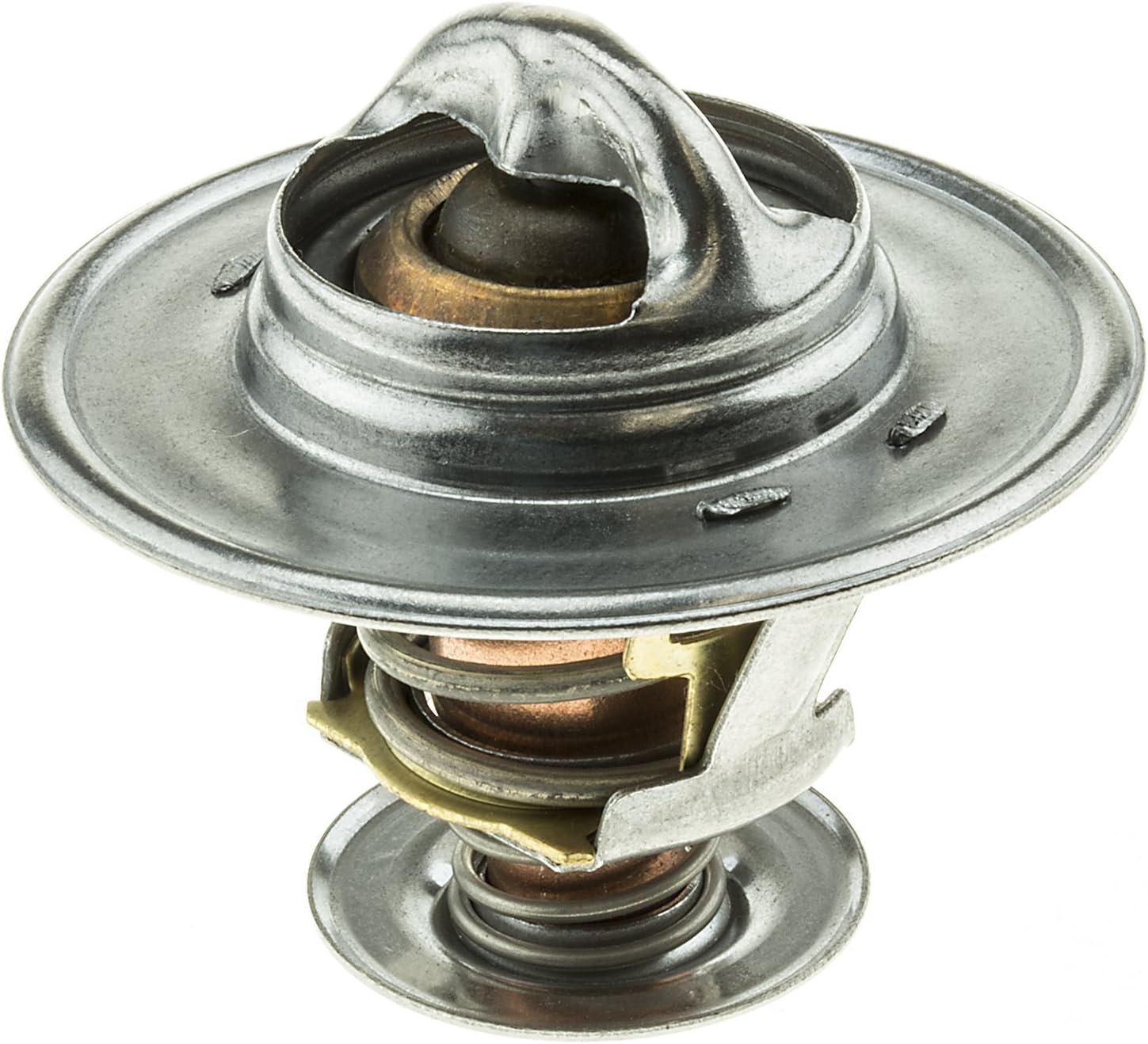
MotoRad Fail-Safe Thermostat
Best Safety Upgrade. Designed to lock open upon failure, saving your engine from overheating. A must-have for older vehicles.
Check Price on Amazon
Permatex Water Pump & Thermostat RTV
Don’t Forget the Seal. Even with a paper gasket, a thin bead of this specialized silicone ensures you won’t have to redo the job due to leaks.
Check Price on Amazon
Stant Cooling System Tester
Pro Diagnostic Tool. If you suspect a leak in the housing or hoses, this pressure tester helps you find it without running the engine.
Check Price on AmazonFAQ: Expert Answers
Can I drive with a bad thermostat?
If it is stuck open, you can drive temporarily, but your engine will run inefficiently. If it is stuck closed, absolutely not. You will overheat the engine within miles, potentially cracking the block.
Q: How long does a car thermostat last?
A: Typically, they last about 10 years or 100,000 miles. It is good practice to replace it whenever you replace your water pump or radiator hoses.
Q: 180°F vs 195°F: Which should I choose?
A: Stick to your manufacturer’s spec (OEM). A 180°F thermostat opens sooner, keeping the engine cooler, but modern engines are designed to run hotter (195°F+) for better emissions and fuel burn. Read our detailed breakdown: 180 vs 195 Thermostat Guide.
Explore More Automotive Cooling Guides
Ensure your vehicle is running at peak performance with our expert comparisons:
Video Resource: ChrisFix Cooling System Diagnostics




 Home
Home
 Info
Info
 Compare
 Reviews
 Shop
Shop