
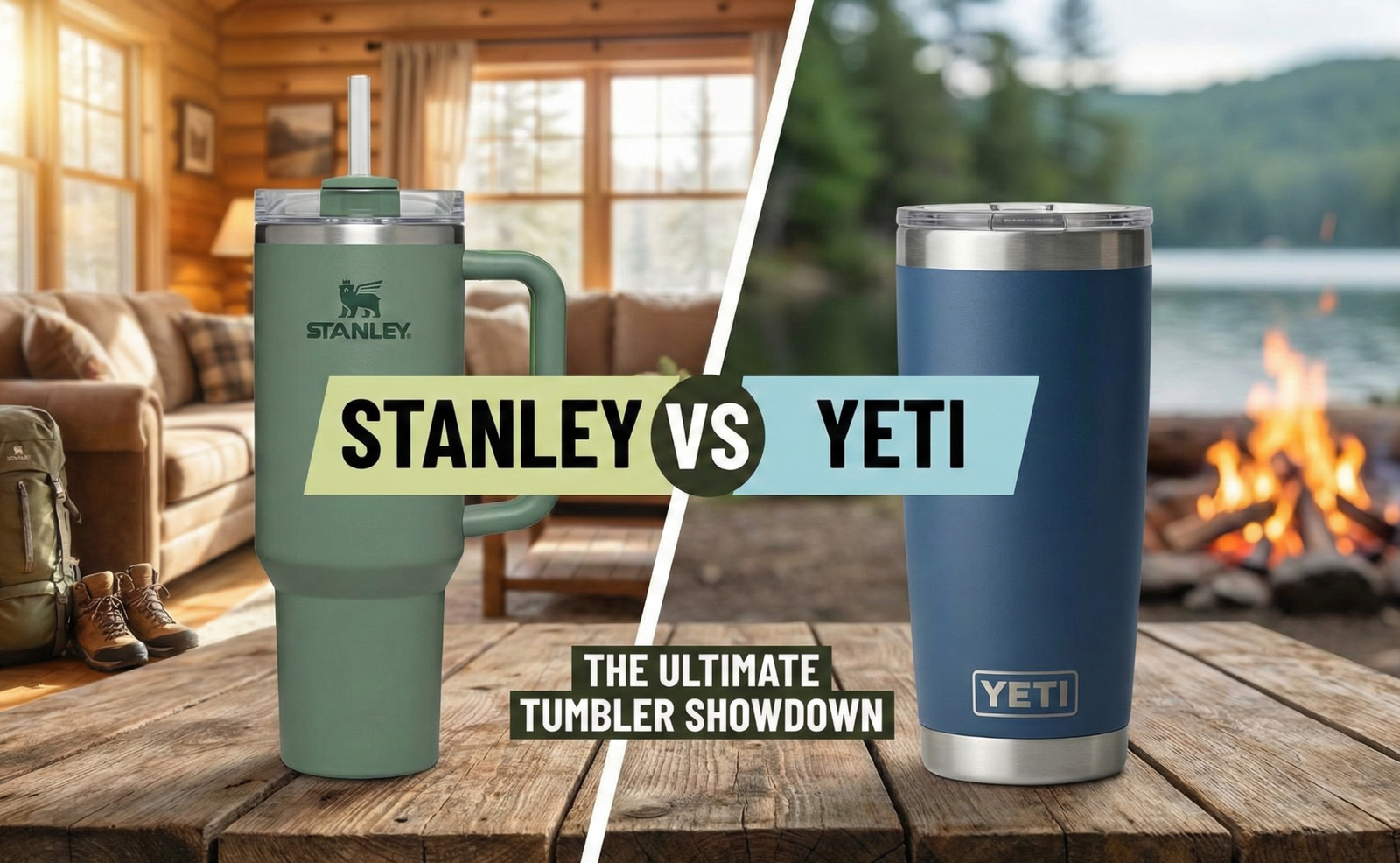
Stanley vs Yeti Tumbler: Which Cup Rules the Commute?
It’s the battle of the hydration heavyweights. On one side, we have the Stanley Quencher H2.0 FlowState, the viral sensation that caused actual stampedes at Target. On the other, the Yeti Rambler, the rugged, over-engineered icon that defined the premium cooler and drinkware category for a decade.
If you are looking to spend $40+ on a cup, you want it to last. But do you prioritize aesthetics and a handle, or rugged durability and leak resistance? We tested both to give you a clear, unbiased winner.

Want the viral favorite? The Stanley Quencher fits every cup holder and looks great doing it.
Check Price on AmazonQuick Verdict (The Cheat Sheet)
Short on time? Here is the breakdown of who should buy what.
| Feature | Stanley Quencher H2.0 | Yeti Rambler (with Straw Lid) |
|---|---|---|
| Best For | Commuters, Office Workers, Trendsetters | Hikers, Campers, Rough Use |
| Cup Holder Fit | ✅ Excellent (Tapered Base) | ⚠️ Good (25/35oz), Poor (Standard 30oz) |
| Handle | Comfort Grip (Included) | Sold Separately (or on Travel Mugs only) |
| Leak Proof? | No (Splash resistant) | No (Straw lid leaks if tipped) |
| Price | $$ (Consistent) | $$ (Comparable) |
Winner for Daily Life: The Stanley Quencher wins for driving and office work purely because of the handle and universal cup holder fit.
Winner for Durability: The Yeti Rambler is thicker, heavier, and feels like it could survive a bomb blast. If you drop your stuff often, go Yeti.
The Contenders: Quencher vs Rambler
To make this a fair fight, we are comparing the two most popular models:
- Stanley: The 40oz Quencher H2.0 FlowState. It features a rotating lid, a massive handle, and a tapered base.
- Yeti: The Rambler 35oz or 42oz Straw Mug. Yeti released these specifically to compete with Stanley, featuring a handle and straw lid.
While Yeti is famous for their coolers, their transition into straw-lid travel mugs has been a direct response to consumer demand. If you are interested in other options, check out our guide on best Yeti thermos alternatives.
Design & Ergonomics
A 40oz tumbler is heavy when full (over 2.5 lbs). Ergonomics matter.
The Handle
Stanley has a large, comfort-grip handle that sits high on the cup. It feels balanced and easy to lift.
Yeti handles are slightly more rigid. On their “Travel Mug” series, the handle is sturdy but smaller. On standard Ramblers, you have to buy a separate handle attachment, which is clunky.
Cup Holder Compatibility
This is Stanley’s superpower. The aggressive taper at the bottom ensures the 40oz Quencher fits in almost any car cup holder. Yeti’s older 30oz Ramblers were often too wide. However, the newer Yeti “Straw Mugs” have adopted a similar tapered design to fix this issue.
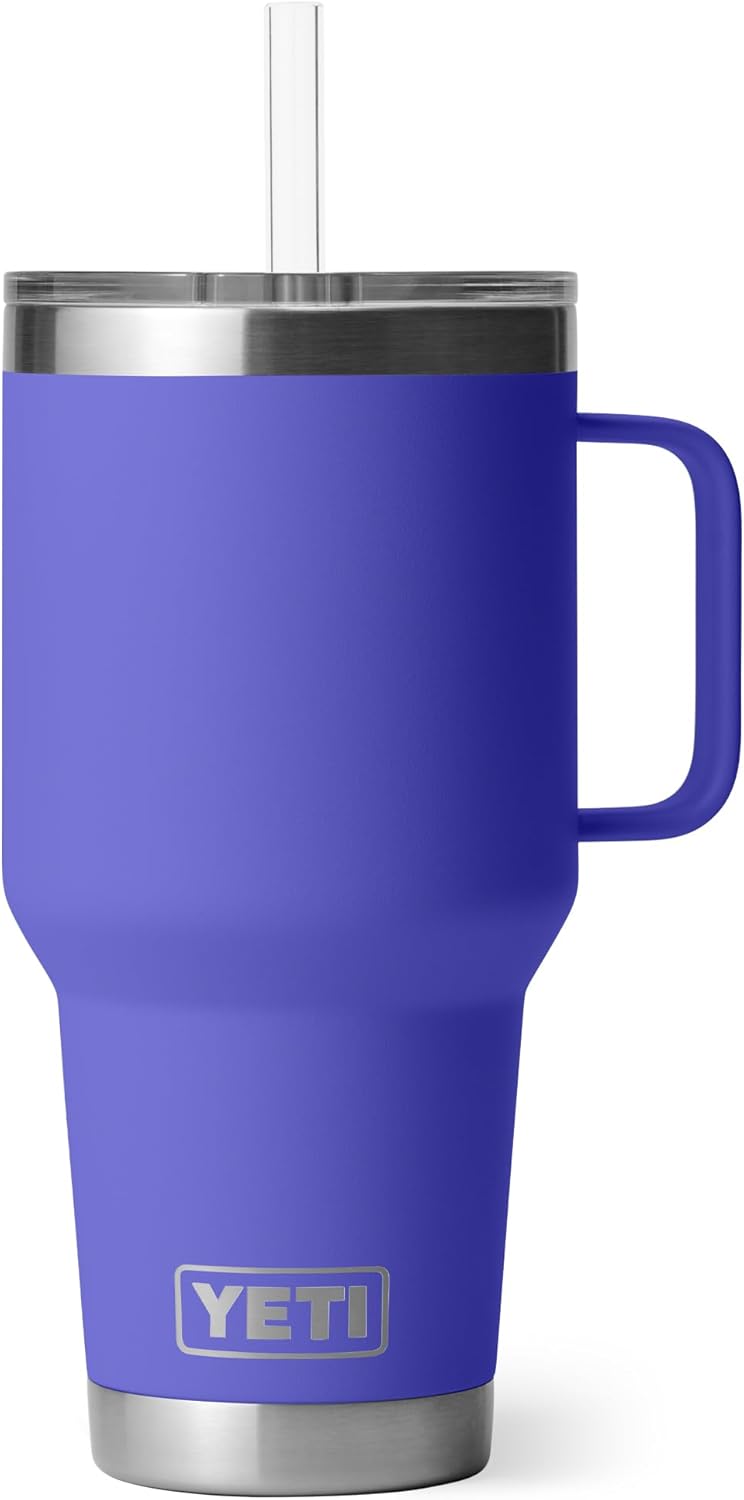
Prefer rugged reliability? The Yeti Rambler is dishwasher safe and nearly indestructible.
Check Price on AmazonInsulation Performance
Both brands use double-wall vacuum insulation. We filled both with ice and water and left them for 24 hours.
- Stanley: Retained ice for 24+ hours. Claims 2 days iced, which holds up in testing.
- Yeti: Also retained ice for 24+ hours. Yeti tends to use slightly thicker steel, which theoretically offers better retention, but in real-world usage, the difference is negligible.
If your priority is keeping drinks cold for literal days, either will suffice. For more specialized options, see our review of the best thermos for cold drinks.
The Leak Test: The “Shake” Factor
Here is the hard truth: Neither of these is leak-proof.
The Stanley FlowState lid has a silicone seal around the straw, which prevents gushing water if knocked over, but it will still dribble. If you turn it upside down, it will leak.
The Yeti Straw Lid is similar. It is not designed to be thrown in a bag. However, if you swap the straw lid for Yeti’s famous MagSlider lid (sold separately or included with standard tumblers), you get better splash resistance, though still not 100% leak-proof.
Need something you can toss in a backpack? You should look at a locking thermos coffee mug instead.
Durability & Dishwashers
Yeti is the clear winner here. Their “Duracoat” color finish is legendary for not chipping or fading. The stainless steel feels thicker and resists dents better than Stanley.
Stanley is durable, but users report that the handle can sometimes loosen over years of use, and the powder coat scratches slightly easier than Yeti’s.
Dishwasher Safety: Both brands are now 100% dishwasher safe. This is a massive improvement over older tumblers that required hand washing.
For those who need extreme toughness (e.g., construction sites), check our guide to the most durable thermos options.
Troubleshooting Common Issues
Even the best cups have quirks. Here is how to fix them:
- Mold in the Lid: Both lids have rubber gaskets that MUST be removed for cleaning. If your water tastes funky, pop the gasket off and soak it in vinegar.
- Stanley Handle Wiggle: If the screws on your Stanley handle loosen, you can tighten them with a small hex key.
- Yeti MagSlider Stuck: The magnetic slider pops off! Don’t be afraid to pull it off to clean the gunk underneath.

Upgrade your Yeti? Grab the MagSlider lid to prevent splashes on bumpy rides.
Check Price on AmazonBrand History: Two Very Different Origins
To really understand why the Stanley Quencher and the Yeti Rambler feel so different in the hand, it helps to know where each brand came from. These aren’t two companies that grew up side by side chasing the same customer — they arrived at the “giant tumbler with a handle and a straw” category from opposite directions, and that history still shows up in the design choices both brands make today.
Stanley: The 111-Year-Old Thermos Brand That Went Viral
Stanley was founded in 1913 by William Stanley Jr., who invented the all-steel vacuum bottle after years of tinkering with vacuum insulation technology. For most of the 20th century, Stanley was known almost exclusively for one product: the classic green thermos that construction workers, hunters, and outdoorsmen carried to job sites and campsites. It was a rugged, no-frills, “your grandfather owned one” brand for nearly a hundred years.
Everything changed in 2016 when Stanley introduced the Quencher — a wide-mouth tumbler with a handle, originally aimed at outdoorsy women who wanted something more portable than a traditional thermos. The Quencher languished in relative obscurity for years until a group of bloggers known as “The Buy Guide” bulk-purchased Quenchers and championed them as the ultimate hydration accessory in 2019. The real explosion happened in late 2023, when a viral video of a woman’s Stanley Quencher surviving a car fire with the ice inside still intact sent the brand into a mainstream frenzy. Stanley leaned into the moment hard, releasing limited-edition colorways, a headline-making Starbucks collaboration cup that caused literal stampedes at Target stores, and an entirely new merchandising strategy built around collectibility.
What this history means for you as a buyer: Stanley’s recent design decisions are heavily influenced by social media trends and collectibility. Expect frequent new colorways, seasonal drops, and limited editions — which is great if you love the hunt but can also mean the exact color you want sells out fast and doesn’t come back.
Yeti: The Cooler Company That Became a Lifestyle Brand
Yeti’s story starts in 2006, nearly a century after Stanley, when brothers Roy and Ryan Seiders — both avid anglers and outdoorsmen — grew frustrated with coolers that cracked, leaked, and generally fell apart under real outdoor use. They designed a rotomolded cooler built to survive being thrown in a truck bed, sat on, and dragged across rocks. That cooler became a status symbol among hunters, fishermen, and off-road enthusiasts long before Yeti ever made a tumbler.
Yeti didn’t enter the drinkware space until 2014 with the original Rambler tumbler, and even then, the company’s design philosophy stayed consistent with its cooler roots: durability and ruggedness first, aesthetics second. Yeti’s drinkware lineup grew steadily rather than virally — there was no single viral moment that catapulted the Rambler into the mainstream the way the car-fire video did for Stanley. Instead, Yeti built its reputation through consistent word-of-mouth among hunters, hikers, and tradespeople who valued gear that simply didn’t break.
What this history means for you as a buyer: Yeti’s drinkware releases are less frequent and less trend-driven than Stanley’s. Colors change more slowly, but the core engineering — wall thickness, lid mechanisms, base design — tends to be more consistent generation over generation. If you want a cup that will still look and function the same way in five years, Yeti’s slower, engineering-first release cadence is arguably the safer bet.
Full Size Lineup & Pricing Breakdown
One of the most common points of confusion when people search “Stanley vs Yeti” is that the two brands don’t actually sell directly matching sizes. A lot of comparison articles gloss over this, but it genuinely affects your buying decision — especially if you’re trying to fit a specific bag, cup holder, or fridge shelf. Here is the complete breakdown of every mainstream size both brands currently offer, along with typical retail pricing.
| Stanley Size | Typical Price | Closest Yeti Size | Typical Price |
|---|---|---|---|
| 14oz (no handle) | $20 | No direct match | — |
| 20oz Quencher | $30–$35 | 20oz Rambler Straw Mug | $35–$40 |
| 30oz Quencher | $35–$40 | 25oz or 26oz Rambler | $35–$38 |
| 40oz Quencher | $45–$55 | 35oz Rambler Straw Mug | $42–$45 |
| No direct match | — | 42oz Rambler Straw Mug | $45–$50 |
| 64oz Quencher | $60–$65 | No direct match (largest Rambler tumbler is 42oz) | — |
Notice the pattern here: Stanley’s sizing runs slightly larger at nearly every price point except the true flagship comparison, where the numbers land close to each other. The most-searched matchup — the 40oz Stanley versus the 42oz Yeti — is actually not an apples-to-apples size at all. The Yeti holds two more ounces for a comparable or slightly lower price, which is one reason some reviewers call the Yeti the better value on paper, even though the Stanley remains the more culturally dominant purchase.
It’s also worth noting that Stanley is the only one of the two brands offering a genuine “jumbo” option at 64oz. If your goal is minimizing refills during an all-day outdoor event, hospital shift, or long road trip, Stanley’s 64oz Quencher is in a size class of its own — Yeti simply doesn’t compete at that capacity in the Rambler tumbler line (their largest coolers aside).
Weight & Dimensions Compared
Weight and physical footprint matter more than most buyers expect, especially once you start comparing how these cups behave in a bag, a car cup holder, or a dishwasher’s top rack. Here’s what independent testing and manufacturer specs consistently show for the most popular near-40oz size class from each brand.
| Spec | Stanley 40oz Quencher | Yeti 42oz Rambler |
|---|---|---|
| Empty Weight | ~1.4 lbs | ~1.7 lbs |
| Height | ~12.3 inches | ~10.8 inches |
| Base Diameter | ~3.5 inches (aggressively tapered) | ~3.3 inches (moderately tapered) |
| Widest Point | ~5.8 inches | ~5.2 inches |
| Fits Standard Dishwasher Top Rack | ⚠️ Sometimes too tall | ✅ Usually fits |
The takeaway here surprises a lot of people: the taller Stanley Quencher is actually the lighter of the two cups empty, largely because Yeti uses a slightly thicker gauge of stainless steel in the double-wall construction — the same reason Yeti has an edge in the durability tests further down this guide. But that extra height on the Stanley is a genuine practical downside for anyone with a shorter dishwasher top rack or a shallow kitchen cabinet — many owners report the Stanley simply doesn’t fit standing upright where a Yeti does.
If cabinet and dishwasher clearance is a daily annoyance for you, the more compact, wider-bodied Yeti shape is the more space-efficient choice, even though it’s the heavier cup to actually lift and carry.
Materials & Sustainability
Both brands market their environmental credentials heavily, but the specifics differ enough that it’s worth breaking down what each company actually claims and what independent verification exists.
Stanley’s Recycled Steel Commitment
Stanley states that its tumblers are made from 90% recycled 18/8 stainless steel, a figure the company has actively marketed as part of its broader sustainability push. This is a genuinely strong number compared to industry norms, and Stanley has leaned into “Built for Life” messaging that frames the Quencher as a decades-long purchase rather than a disposable trend item — somewhat in tension with the brand’s collectible, frequently-refreshed color strategy.
Yeti’s Material Approach
Yeti uses 18/8 food-grade stainless steel across its Rambler line as well, but the company has been less specific publicly about recycled content percentages in its drinkware compared to Stanley’s headline figure. Where Yeti has focused its sustainability messaging is more on product longevity — the argument being that a cup engineered to survive a decade of hard use has a smaller lifetime environmental footprint than one that gets replaced more frequently, even if its recycled-content number isn’t as prominently marketed.
Which Claim Matters More?
Recycled content and product longevity are both legitimate sustainability levers, and reasonable people weigh them differently. If a specific, publicly stated recycled-material percentage matters to you as a purchasing factor, Stanley’s messaging is more concrete. If you weight “the cup you’ll actually still be using in eight years” more heavily than the recycled content of the steel itself, Yeti’s durability-first engineering supports that outcome slightly better based on the wear testing referenced throughout this guide.
Stanley’s 90% recycled steel and lifetime warranty make the Quencher a long-haul buy, not just a trend piece.
Check Price on AmazonLid & Straw Technology Deep Dive
The lid is genuinely the single biggest functional difference between these two cups, and it deserves more detail than a quick pros-and-cons list can give it.
Stanley’s FlowState Lid
The FlowState lid rotates between three positions: a straw opening, a full-cover “closed” position, and a direct-sip opening on some versions. The straw itself is a firm, reusable plastic straw that pushes through a silicone grommet designed to reduce (not eliminate) splashing. One frequent complaint from long-term owners is that the straw can pick up a slightly plastic taste over months of use, and that the silicone grommet around the straw hole is a common mold trap if not cleaned weekly.
Yeti’s Straw Lid and the MagSlider System
Yeti’s Straw Mug lid uses a molded-in straw stopper, which many reviewers describe as noticeably firmer and more secure-feeling than Stanley’s straw assembly — it’s less likely to pop loose or wiggle during transport. Separately, Yeti’s standard (non-straw) Ramblers use the MagSlider lid: a magnetic sliding cover over the drinking opening that snaps satisfyingly into place and offers meaningfully better splash resistance than either brand’s straw-lid design. The catch is that the MagSlider isn’t included on the straw-mug version most people compare directly to the Stanley Quencher — you’d need to buy it as a separate accessory or choose a non-straw Rambler instead.
Straw Diameter and Universal Fit
Both brands use a similar straw diameter in the 9–10mm range, which is why generic replacement straws sold in bulk packs on Amazon tend to work across both ecosystems, even though the lids themselves are not interchangeable between brands due to differing thread pitch and opening diameter.
Which Lid Wins for Which Use Case?
- Best for hot coffee: Stanley’s full-cover closed position handles hot drinks slightly more confidently out of the box.
- Best for gym bags and backpacks: A Yeti Rambler fitted with the MagSlider lid (not the straw lid) is the more splash-resistant combination of the two brands.
- Best for straw feel and firmness: Yeti’s molded-in straw stopper on the Straw Mug edges out Stanley’s straw assembly.
- Easiest to clean: Both require weekly gasket removal and vinegar soaks — neither has a meaningful edge here.
Stability & Tip-Over Risk
This is a genuinely underrated factor that rarely gets covered in mainstream comparisons, but it matters a great deal if you’re using your tumbler on a desk, in a car without a deep cup holder, or on uneven camping surfaces.
The Stanley Quencher’s more aggressive base taper and wider overall base diameter give it a lower, broader center of gravity relative to its height, which several independent testers have found makes it meaningfully less prone to tipping over on a flat desk or table compared to the Yeti. The Yeti Rambler, with its narrower base relative to its more barrel-shaped body, has been reported by multiple reviewers as slightly more prone to tipping, particularly on uneven surfaces like a car console tray, a folding camp table, or a slightly sloped countertop.
Neither cup is unstable in absolute terms — these are both heavy, bottom-weighted vessels that require a real nudge to actually fall over. But if you have young kids, pets, or a habit of resting your cup near the edge of a desk, the Stanley’s base geometry gives it a slight practical edge in this specific, easy-to-overlook category.
Colors, Collabs & Customization
If aesthetics and personalization are a real factor in your decision — and for a huge share of buyers in this category, they are — the two brands take very different approaches.
Stanley’s Collectible Strategy
Stanley releases new colorways at a rapid pace, often tied to seasons, holidays, or high-profile retail partnerships. The Starbucks collaboration cup remains the most famous example, but Stanley has also run limited drops with Target, Free People, and other retail partners that sell out within hours and subsequently trade on resale markets for multiples of retail price. If you enjoy the hunt — following restock alerts, camping out for drops, scrolling resale listings — Stanley’s release cadence rewards that behavior in a way Yeti’s simply doesn’t.
Yeti’s Steadier Color Rotation
Yeti refreshes its color lineup less frequently and with less marketing fanfare. The brand does release seasonal and limited colors, including collaborations tied to sports teams, outdoor brands, and special editions, but the pace and hype cycle is noticeably calmer than Stanley’s. This makes Yeti colors easier to find in stock at full retail price, but less exciting for buyers who specifically enjoy limited-run collectibility.
Engraving and Personalization
Both brands, along with numerous third-party engravers on Amazon and Etsy, offer laser engraving services for an added fee, typically $10–$20. Personalization works equally well on either brand’s stainless steel surface and is a popular gifting upgrade that eliminates the “everyone has the same cup” problem in offices, gyms, and schools.
Best Choice by Use Case
Rather than declaring one universal winner, it’s more useful to match the cup to your actual daily routine. Here’s how we’d steer different types of buyers based on everything covered in this guide.
For Office Workers and Commuters
The Stanley Quencher’s superior cup holder taper, lighter empty weight, and larger 40oz-and-up capacity make it the more natural fit for desk use and daily driving. The tradeoff is remembering it might not fit your dishwasher’s top rack standing upright.
For Hikers, Campers, and Outdoor Workers
Yeti’s thicker steel, better dent resistance, and MagSlider lid option (when paired with a non-straw Rambler) make it the more rugged choice for gear that gets thrown in truck beds, dropped on rocks, and generally treated roughly. This is, after all, the exact use case Yeti was originally engineered around.
For Gym-Goers
Either brand performs well here, but the Yeti’s firmer molded-in straw stopper and the option to swap to a MagSlider lid give it a slight edge for anyone tossing their cup into a gym bag alongside other gear.
For Parents Buying for Kids or Teens
Stanley’s lighter empty weight and lower tip-over risk on a desk or kitchen table make it a somewhat more forgiving choice for younger users, though neither cup was designed specifically with children in mind — both are heavy, all-metal vessels that can dent floors and other objects if dropped.
For Gifting
Stanley’s wider color selection, viral cultural cachet, and frequent limited-edition drops make it the more exciting unboxing experience for most recipients, particularly anyone active on TikTok or Instagram. Yeti is the safer, more “adult” gift for someone who values engineering and durability over trend appeal — think a retirement gift for an avid outdoorsman rather than a birthday gift for a teenager.
For Hot-Drink Drinkers
Stanley’s out-of-the-box closed lid position is the more confidence-inspiring choice for daily coffee or tea without needing to buy an additional lid accessory.
Resale Value & Secondhand Market
This is a genuinely unique dimension of the Stanley-versus-Yeti conversation that doesn’t apply to most other product comparisons: because Stanley’s limited colorways have gone viral, a real resale market has developed on platforms like eBay, Poshmark, and Facebook Marketplace for discontinued or hard-to-find Quencher colors — some limited editions have resold for two to four times their original retail price shortly after a sellout.
Yeti drinkware, by contrast, doesn’t carry the same collector premium on the secondhand market. Used Ramblers typically sell for well below retail price, reflecting the fact that Yeti’s value proposition is built on durability and function rather than limited-run collectibility. If you’re purchasing purely as a long-term daily-use item, this distinction doesn’t matter much. But if there’s any chance you’d want to resell a rare colorway down the line, Stanley is the brand where that market genuinely exists.
Third-Party Lids & Accessories
Both cups have spawned large third-party accessory ecosystems, but the maturity of each ecosystem differs.
Because the Stanley Quencher has been the more culturally dominant product over the past two years, its accessory market is larger and more diverse: silicone boots in every conceivable color, handle-mounted name tag holders, universal replacement lids with locking mechanisms not offered by Stanley itself, and crossbody carrying slings sized specifically for the 40oz Quencher’s dimensions. Yeti’s accessory market is smaller but more focused on functional upgrades, particularly aftermarket handle attachments for Ramblers that don’t ship with one included, and replacement MagSliders in different colors.
One practical tip: if you want to upgrade a straw-lid Rambler with better splash resistance, buying Yeti’s own MagSlider lid separately (rather than a third-party universal lid) is the more reliable option, since Yeti’s proprietary thread pattern isn’t well-served by generic replacement lids the way Stanley’s more widely-cloned design is.
Warranty & Customer Service Compared
Both brands stand behind their drinkware with above-average warranties for the category, but the terms differ in ways worth understanding before you buy.
Stanley’s “Built for Life” warranty covers manufacturing defects in the stainless steel body for the lifetime of the product, though plastic components like lids and straws are generally treated as consumable parts with shorter or no warranty coverage — you’ll likely need to buy replacement lids and straws out of pocket as they wear over years of use. Yeti offers a stated 5-year warranty on its drinkware covering manufacturing defects, which is shorter on paper than Stanley’s lifetime claim but is frequently praised in customer reviews for being straightforward to file and fast to resolve, often replacing an item without requiring the original cup to be shipped back.
In practice, most owners of either brand report positive experiences with warranty claims for genuine manufacturing defects like insulation failure or seam issues. Neither warranty typically covers cosmetic wear like powder coat scratches or dents from drops, which are considered normal use rather than defects.
How Other Brands Stack Up
Stanley and Yeti dominate the cultural conversation, but they’re not the only serious players in the insulated tumbler category. If neither cup feels like a perfect fit, it’s worth knowing where else to look.
Hydro Flask is the other major legacy player, known for a slightly narrower, more minimalist aesthetic and a strong reputation in the running and cycling community. Hydro Flask’s lids tend to prioritize simplicity over the straw-and-handle format that defines both Stanley and Yeti’s most popular models. For a full breakdown of that specific matchup, see our dedicated comparison between Stanley and Hydro Flask alternatives.
Owala has carved out a strong niche with its “FreeSip” dual-function spout that lets users switch between sipping and using a straw without swapping lids — a genuinely different approach from either Stanley or Yeti’s fixed straw-only design.
Budget alternatives like Simple Modern, RTIC, and Walmart’s Ozark Trail line have emerged specifically to compete on price against Stanley and Yeti’s premium positioning, often matching insulation performance within a couple of hours of ice retention for a fraction of the cost. If price is your primary constraint rather than brand prestige, our roundup of the best Stanley cup alternatives covers these budget options in much greater depth.
Common Myths, Debunked
Myth: “Stanley cups are dangerous because of lead.”
As covered earlier in this guide, the lead pellet Stanley uses is fully sealed at the base of the cup under a stainless steel cap and is not in contact with the drink contents. It only becomes a theoretical concern if the base is severely damaged or pried open, at which point the cup would be visibly non-functional anyway.
Myth: “Yeti cups keep drinks cold noticeably longer than Stanley.”
Independent testing generally shows the two brands perform within a narrow, largely imperceptible margin of each other in real-world ice retention — both comfortably exceed 24 hours. Marketing claims about “superior” insulation from either camp should be taken with some skepticism; the practical difference during a typical day of use is close to zero.
Myth: “You can use Yeti lids on Stanley cups or vice versa.”
The thread pitch and lid diameter differ between the two brands, so lids are not cross-compatible despite looking similar at a glance. Always buy replacement or upgrade lids from the same brand as your cup body, or a universal third-party lid explicitly rated for that brand’s opening diameter.
Myth: “The bigger cup is always the better value.”
As the size and pricing table above shows, larger capacity doesn’t always track cleanly with price per ounce, and a bigger cup that doesn’t fit your bag, cup holder, or actual daily water intake isn’t a better value just because it holds more. Match the size to your routine, not just the sticker price.
Final Buying Guide & Decision Framework
After testing both cups extensively across insulation, durability, ergonomics, and real-world daily use, here is the simplified decision framework we’d recommend working through before you buy.
- Start with your primary use case. Desk and commute-focused use favors Stanley; rugged outdoor and gym use favors Yeti.
- Check your dishwasher and cabinet clearance. If vertical space is tight, the shorter Yeti is the safer physical fit.
- Decide how much you value color selection and collectibility. If limited-edition drops and resale potential matter to you, Stanley is the clear pick.
- Consider your hot-drink habits. Daily hot coffee drinkers will find Stanley’s closed lid position slightly more convenient out of the box.
- Factor in your budget for accessories. If you want the best possible splash resistance, budget for Yeti’s MagSlider lid as an add-on rather than relying on either brand’s default straw lid.
There is no universally “correct” answer between these two cups — both are well-engineered, backed by real warranties, and capable of years of daily service. The right choice comes down to matching the cup’s specific strengths to the way you’ll actually use it every day, rather than chasing whichever brand is more visible on your social media feed this month.




 Home
Home
 Info
Info
 Compare
 Reviews
 Shop
Shop