
What Is Thermostatic? The Complete Guide to Thermostatic Technology, Valves, and Systems
Understanding how thermostatic controls keep your water, home, and appliances at a steady, safe temperature
1. What Does “Thermostatic” Mean?
The word thermostatic comes from “thermostat” — a device that automatically regulates temperature by responding to changes in heat. So when something is described as thermostatic, it means it can sense temperature and adjust itself without a person having to manually intervene every time conditions change. It’s a self-correcting system, not a static setting.
In everyday life, “thermostatic” shows up far more often than most people realize. Your home’s heating system, your car’s engine cooling system, certain ovens, radiator valves, and — most commonly searched — thermostatic shower valves all rely on this same basic idea: sense the temperature, compare it to a target, and adjust automatically to keep things stable.
To understand the concept fully, it helps to first understand what a thermostat actually is, since a thermostatic device is essentially a thermostat built directly into a mechanical or plumbing component rather than existing as a standalone wall-mounted unit.
In short: “Thermostatic” describes any system, valve, or device that automatically maintains a set temperature by continuously sensing heat and reacting to it, rather than relying on a fixed, unchanging setting.
It’s worth pausing on why this distinction matters so much in practice. A non-thermostatic tap or valve only does what you physically tell it to do at the moment you touch it. If conditions change a second later — someone runs the dishwasher, the boiler cycles, or the incoming water main fluctuates — the output at your end changes too, and nothing corrects it until you notice and adjust it yourself. A thermostatic device removes that dependency on human reaction time entirely. It’s constantly sampling the current condition and constantly nudging its own mechanism to keep the result where you set it, dozens of times a minute if needed.
This is also why the term shows up in technical specification sheets, plumbing codes, and appliance manuals far more often than in casual conversation. Manufacturers use “thermostatic” as a precise engineering label, not a marketing buzzword — it tells you exactly what category of temperature control a product uses, which has real implications for safety, reliability, and how the product behaves under changing real-world conditions.
Thermostatic as a Design Philosophy
Beyond individual products, “thermostatic” can also describe an entire design philosophy: build the correction into the mechanism itself rather than relying on the end user to supply it. This philosophy appears again and again across engineering disciplines, from HVAC systems that anticipate temperature swings before they happen, to industrial process controls that must hold a chemical reaction within a narrow temperature band for safety reasons. Once you recognize the pattern, you start to see thermostatic thinking baked into an enormous range of everyday technology — most of it invisible until something fails and you’re forced to think about how it actually works.

Curious what thermostatic technology looks like in your own bathroom?
See real thermostatic shower valves and systems people are buying right now.
Check Price on Amazon2. The Science Behind Thermostatic Technology
At the heart of nearly every thermostatic device is a temperature-sensitive element — often a wax capsule, a bimetallic strip, or an electronic sensor — that physically expands or contracts as heat changes around it. That expansion and contraction is translated into mechanical movement, which then shifts a valve, opens or closes a vent, or triggers a switch.
Wax-based thermostatic elements are especially common because paraffin wax expands predictably and repeatedly as it melts and cools. Engineers exploit this predictable expansion to create a purely mechanical feedback loop — no electricity, no computer chip, just physics doing the regulating. This is part of why so many thermostatic valves have remained reliable for decades with almost no moving electronic parts to fail.
This feedback loop is the same underlying principle used in a standard how thermostats work in your home’s HVAC system, just applied on a smaller, more localized scale — inside a single valve body rather than across an entire building.
Feedback Loops, Simplified
- Sense: A temperature-sensitive element detects the current temperature.
- Compare: The element’s physical state reflects whether the temperature is above or below the target.
- Act: Mechanical movement adjusts flow, output, or mixing ratio in real time.
- Repeat: The cycle continues continuously, correcting for any drift.
What makes this loop so effective is how fast it operates compared to human reaction time. A person adjusting a manual tap has to notice a temperature change, decide how much to turn the handle, physically move it, and then wait to feel whether the correction was right — a process that can easily take several seconds, during which the water might be uncomfortably hot or cold. A thermostatic cartridge, by contrast, is already partially reacting before the change is even fully noticeable, because the wax or bimetallic element inside it is physically embedded in the flow path and responding to temperature shifts in near real time.
Why Wax-Based Elements Dominate Plumbing Applications
Wax might seem like an unusual engineering material, but it has a few properties that make it almost ideal for this job. It expands by a very consistent, repeatable percentage of its volume as it melts, it’s chemically stable over thousands of heating and cooling cycles, it’s inexpensive to manufacture at scale, and it doesn’t degrade the way many metals or plastics do when exposed to constant moisture. Bimetallic strips — two different metals bonded together that expand at different rates — serve a similar role in some designs, particularly in radiator valves and certain industrial applications, but wax capsules remain the dominant choice inside most residential thermostatic shower and mixing valves because of their durability and precision.
None of this requires a power source, a circuit board, or software. That’s part of why thermostatic technology has remained essentially unchanged in its core mechanism for decades even as digital alternatives have entered the market — the physics simply works, reliably, without needing to be reinvented.
A Brief History of Thermostatic Control
The broader concept of automatic temperature regulation dates back centuries, with early mechanical thermostats appearing in industrial and scientific contexts long before they reached ordinary homes. Over time, as manufacturing techniques improved and materials science advanced, engineers were able to shrink these regulating mechanisms down from room-sized industrial equipment into compact cartridges small enough to fit inside a single bathroom valve. This miniaturization is what eventually made thermostatic shower valves commercially viable and affordable enough for widespread residential use, rather than remaining a specialty component reserved for industrial or medical equipment.
Today, the same core wax-expansion principle used in early industrial thermostats is manufactured with much tighter tolerances and higher-grade materials, which is why modern thermostatic valves can hold a target temperature far more precisely than their early twentieth-century predecessors, often within a degree or two even under fluctuating supply conditions.
3. How a Thermostatic Valve Actually Works
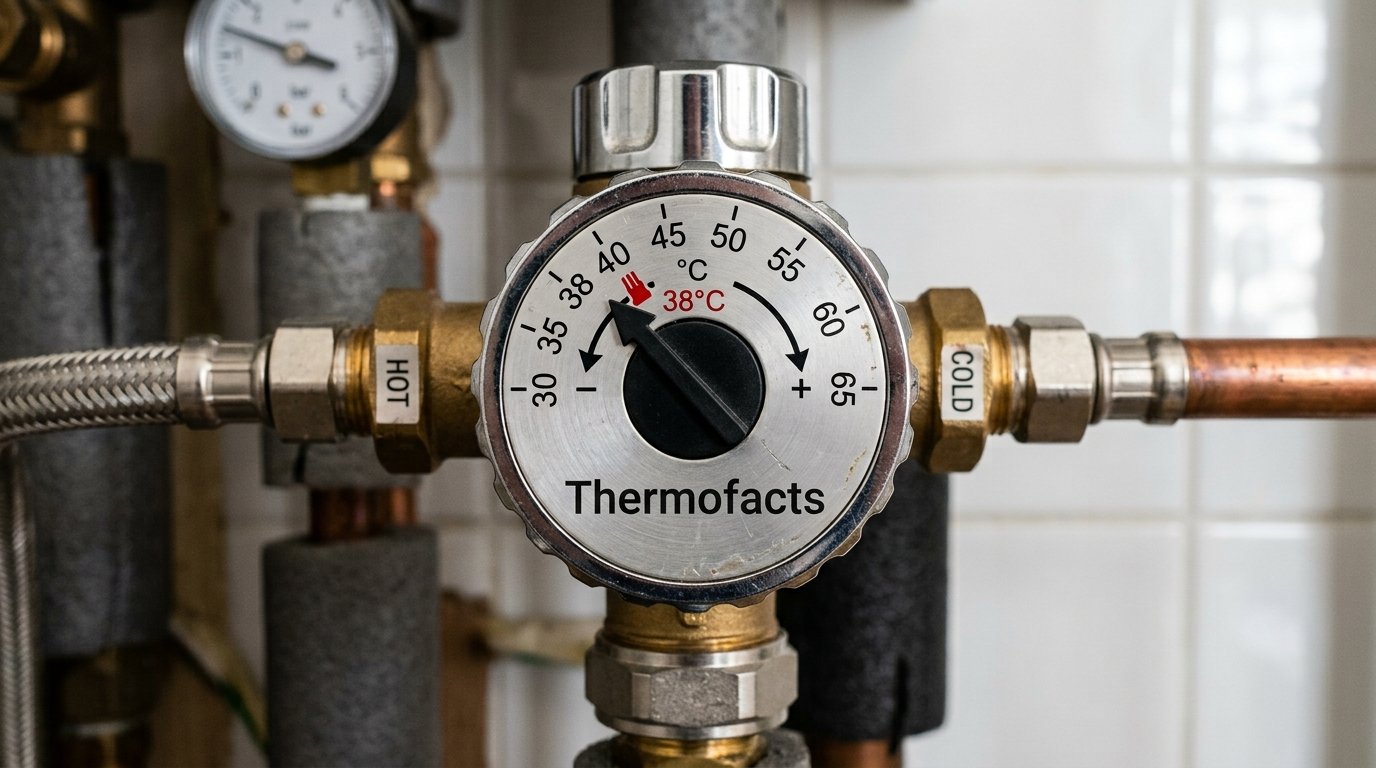
A thermostatic valve is the physical mechanism where this science gets applied to real-world flow control — most often water or coolant. Inside the valve body, hot and cold inputs meet at a mixing chamber. A thermostatic cartridge sits inside that chamber and constantly senses the blended temperature.
When the sensed temperature drifts above the target, the cartridge expands slightly, shifting internal components to reduce hot-water flow and increase cold-water flow. When temperature drops below target, the opposite happens. This adjustment occurs continuously and automatically, which is why thermostatic valves feel so stable compared to manual taps — there’s no lag between a change in supply pressure or temperature and the corrective response.
| Component | Function |
|---|---|
| Mixing Chamber | Where hot and cold water combine before reaching the outlet |
| Thermostatic Cartridge | Wax or bimetallic element that expands/contracts with temperature |
| Piston or Shuttle | Physically moves to restrict hot or cold flow based on cartridge movement |
| Temperature Dial | Sets the target output temperature the valve tries to maintain |
| Safety Stop | Mechanical limiter preventing accidental scalding temperatures |
For a deeper visual breakdown specific to bathroom fixtures, this guide on how a thermostatic shower works walks through the exact plumbing path water takes from the supply lines to the showerhead.
Step-by-Step: What Happens Inside the Valve
Imagine turning on a thermostatic shower and setting the dial to a comfortable 38°C. The moment you do, hot and cold water begin flowing into the mixing chamber from opposite sides. Initially, the blend might land slightly off target — perhaps a touch too cool if the hot water hasn’t fully reached temperature yet, or slightly too warm if the cold line pressure is temporarily low. The thermostatic cartridge senses this deviation almost instantly.
As the cartridge’s internal element expands or contracts in response, it shifts a small piston or shuttle valve inside the cartridge housing. This shuttle physically narrows the opening on whichever side — hot or cold — is contributing too much to the mix, while widening the opening on the other side. The result is a self-correcting nudge back toward the target temperature, and this entire adjustment can happen in well under a second.
If someone elsewhere in the house then causes a pressure drop on the cold supply — say, a toilet refilling — the incoming water blend would momentarily skew hotter. Rather than that hotter water reaching your skin, the thermostatic cartridge senses the shift and compensates before it becomes noticeable, which is the single biggest practical advantage this technology offers over manual or even pressure-balanced alternatives.
The Role of the Safety Stop
Most thermostatic valves also include a separate mechanical safety stop, sometimes called a high-limit stop, which is independent of the main temperature-sensing cartridge. This component physically prevents the dial from being turned past a certain point unless the user deliberately overrides it — usually by pressing a button or lifting a collar on the dial itself. This two-layer approach (automatic sensing plus a hard mechanical limit) is why thermostatic valves are frequently specified in building codes for care facilities, schools, and family bathrooms where scald prevention is a legal requirement rather than just a nice-to-have feature.
4. Thermostatic vs. Manual Mixing Valves
Not every mixing valve is thermostatic. Many homes still use manual mixing valves, where a single handle blends hot and cold water based purely on the position you set it to — with no automatic correction if supply conditions change. Understanding the difference matters, especially when comparing fixtures for a renovation or new installation.
| Feature | Thermostatic Valve | Manual Mixing Valve |
|---|---|---|
| Temperature stability | Automatically maintained | Can fluctuate with pressure changes |
| Scald protection | Built-in mechanical limiter | Usually none |
| Response to pressure drops | Self-corrects instantly | User must manually readjust |
| Initial cost | Higher | Lower |
| Long-term comfort | Consistent, hands-free | Requires attention each use |
| Best for | Families, shared bathrooms, safety-focused homes | Budget installs, simple setups |
If someone else in the house flushes a toilet or starts the washing machine while you’re mid-shower, a manual valve can send a sudden blast of hot or cold water your way. A thermostatic valve corrects for that pressure shift in a fraction of a second, which is precisely why so many people search for the best thermostatic shower systems before renovating a bathroom used by multiple people.
A Related but Different Category: Pressure-Balanced Valves
It’s worth briefly distinguishing thermostatic valves from pressure-balanced valves, since the two are sometimes confused in product listings. A pressure-balanced valve responds to changes in the pressure difference between the hot and cold supply lines, closing off the side experiencing higher pressure to keep the ratio roughly constant. This helps prevent sudden temperature spikes caused by pressure surges, but it doesn’t actually measure or target a specific output temperature the way a thermostatic valve does. In practice, pressure-balanced valves offer partial protection against scalding, while thermostatic valves offer more complete, precise control because they’re reacting to actual temperature rather than just pressure differential.
Some premium fixtures combine both technologies — a thermostatic cartridge for precise temperature targeting, paired with pressure-balancing elements for extra-fast response to sudden pressure events — giving the most consistent performance available in a residential setting.
Cost-Benefit Reality Check
It’s easy to assume the cheaper manual valve is the more sensible choice, especially on a tight renovation budget. But it helps to think about the total cost of ownership rather than just the sticker price. A thermostatic valve typically costs more upfront, but it can reduce water waste from constant readjusting, lower the risk of scald-related injuries and any associated liability in shared or rental housing, and often carries a longer warranty specifically because manufacturers trust the mechanism’s durability. For many households, especially those with children, elderly residents, or multiple daily users, the extra upfront cost pays for itself in comfort and safety well before the valve reaches the end of its service life.
5. Where Thermostatic Technology Is Used
Thermostatic control isn’t limited to bathrooms. Once you understand the underlying principle, you’ll start noticing it across dozens of everyday systems.
- Showers and bathtubs: Automatic mixing valves that hold a consistent output temperature.
- Radiators: Thermostatic radiator valves (TRVs) that open and close based on room temperature.
- Car engines: A thermostatic valve regulates coolant flow to keep the engine within its optimal operating range.
- Ovens: Thermostatic controls maintain a consistent internal cooking temperature.
- Industrial equipment: Thermostatic valves regulate fluid temperatures in manufacturing processes.
- Aquariums and greenhouses: Thermostatic heaters maintain stable environmental temperatures for sensitive organisms or plants.
Despite the different applications, the underlying mechanism is nearly identical everywhere: sense, compare, correct, repeat.
What’s notable is how differently the same basic principle gets tuned depending on the stakes involved. A thermostatic valve regulating a shower needs to react within a second or two to feel comfortable, while an industrial thermostatic valve regulating a chemical process might be engineered to react even faster and hold a far tighter tolerance, because even a small temperature deviation could affect product quality or safety. Meanwhile, a thermostatic radiator valve heating a bedroom is intentionally tuned to react more gradually, since rapid cycling would waste energy and create an uncomfortable, constantly fluctuating room temperature. Recognizing these differences helps explain why not every thermostatic component is interchangeable, even though they all share the same underlying sense-and-correct logic.
Thermostatic Technology in Vehicles
Engine cooling is one of the oldest and most critical uses of thermostatic control outside plumbing. When an engine is cold, its thermostatic valve stays closed, blocking coolant from circulating through the radiator so the engine can warm up quickly and reach its efficient operating temperature. Once the engine reaches that target range, the valve opens, allowing coolant to flow through the radiator and shed excess heat. Without this thermostatic regulation, engines would either run too cold for efficient combustion or overheat under load — both of which cause accelerated wear and reduced performance over time.
Thermostatic Radiator Valves at Home
In home heating systems, thermostatic radiator valves (TRVs) let each room maintain its own target temperature independently, rather than relying on a single central thermostat for the whole house. A TRV sits at the base of a radiator and senses the surrounding room air temperature. As the room warms toward the set point, the valve gradually restricts hot water flow into that specific radiator, reducing heat output; as the room cools, it opens back up. This room-by-room control is one of the more practical energy-saving upgrades available in older homes with traditional radiator heating.
Beyond the Obvious: Specialty Applications
Thermostatic principles also appear in less obvious places — incubators that must hold a precise temperature for hatching eggs or lab samples, wine storage units that need stable cellar-like conditions, and even certain cookware and slow cookers designed to hold food at a safe serving temperature without active monitoring. In every one of these cases, the appeal is the same: consistent results without requiring constant human attention.
6. Thermostatic Shower Systems Explained
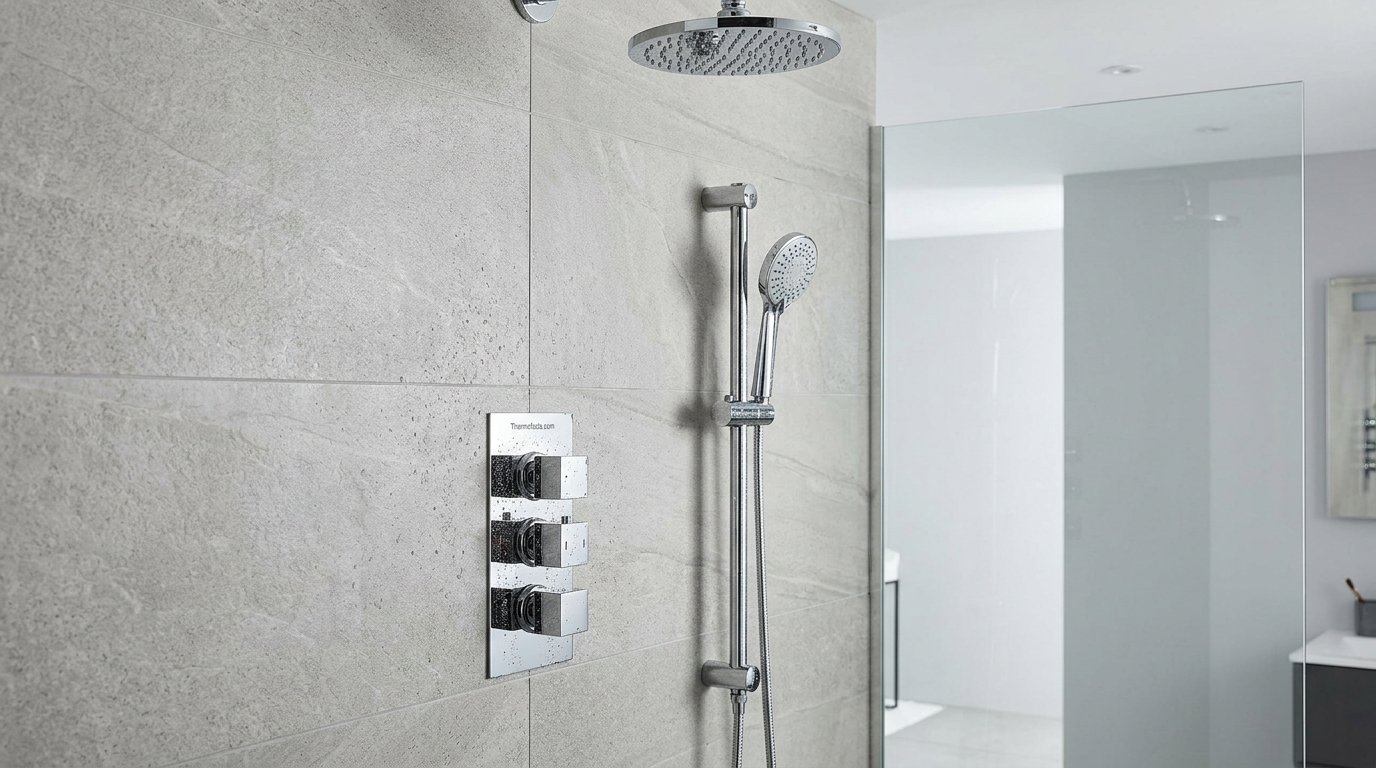
Because thermostatic showers are the single most common reason people search for this topic, it’s worth digging deeper here. A thermostatic shower system typically includes a mixing valve (often concealed in the wall), a temperature control dial marked in clear degree increments, and a separate volume control that adjusts flow rate independently of temperature.
This separation of temperature and volume controls is one of the biggest quality-of-life upgrades over older single-handle showers, where adjusting flow often meant accidentally shifting temperature too.
Many modern systems also include exposed or concealed valve options, multiple outlets (rainfall head plus handheld), and diverter valves for switching between them — all while the thermostatic cartridge keeps the blended temperature steady across every outlet in use.
Want real product comparisons instead of theory? This roundup of the best thermostatic shower systems breaks down specific models by price, features, and installation type.
Concealed vs. Exposed Thermostatic Valves
Concealed valves hide the entire valve body inside the wall cavity, leaving only the temperature dial, volume control, and outlet visible on the finished tile surface. This creates a cleaner, more minimalist look and is popular in modern bathroom renovations, but it does require adequate wall depth and, in most cases, professional installation before tiling is completed, since the plumbing connections need to be finalized before the wall is closed up.
Exposed valves, on the other hand, mount directly onto the wall surface with visible pipework, making them significantly easier to retrofit into an existing bathroom without opening up the wall. They’re often the more practical choice for renovations where minimizing disruption and cost matters more than achieving a fully seamless finish.
Multi-Outlet Configurations
Many thermostatic shower systems support more than one water outlet — a fixed overhead rainfall head, a handheld shower on a sliding rail, and sometimes body jets — all controlled through a single thermostatic cartridge with a diverter valve that routes flow to whichever outlet (or combination of outlets) the user selects. Because the thermostatic element sits upstream of the diverter, the temperature stays consistent no matter which outlet, or combination of outlets, is active, which is a meaningful convenience upgrade compared to older systems where switching outlets often meant a brief temperature shock.

Ready to upgrade your shower?
Compare top-rated thermostatic shower valves and complete systems.
View Options on Amazon7. Benefits of Thermostatic Technology
Advantages
- Consistent temperature regardless of pressure or supply fluctuations
- Built-in scald protection, especially valuable for children and elderly users
- Less water waste from constant readjusting
- Improved comfort and predictability every time it’s used
- Longer mechanical lifespan in many designs due to simpler, fewer moving parts than digital alternatives
- No dependency on electricity, batteries, or an internet connection to function correctly
- Reduced risk of injury in households with young children, elderly residents, or anyone with reduced sensitivity to temperature
Trade-offs
- Higher upfront cost compared to manual valves
- Cartridges can wear out over years of use and require replacement
- Slightly more complex installation, sometimes requiring a professional
- Not all older plumbing systems are compatible without adjustment
- Some models require a minimum incoming water pressure to function as designed
Weighing these trade-offs generally comes down to how the fixture will be used day to day. A single-occupant bathroom with stable, modern plumbing may not need the full feature set of a thermostatic valve as urgently as a family bathroom where multiple people with very different comfort thresholds share the same shower throughout the day. In shared or high-traffic settings, the benefits tend to outweigh the extra cost fairly quickly.
8. Common Types of Thermostatic Valves
Thermostatic valves aren’t one-size-fits-all. Depending on the application, manufacturers design several distinct types, each suited to a particular job.
- Thermostatic Mixing Valves (TMVs): Blend hot and cold water to a safe, stable output temperature — the type most commonly found in showers.
- Thermostatic Radiator Valves (TRVs): Regulate hot water flow into a radiator based on the surrounding room’s air temperature.
- Engine Thermostatic Valves: Control coolant circulation to keep an engine within its ideal operating temperature range.
- Steam Trap Thermostatic Valves: Used in industrial steam systems to release condensate while retaining steam.
- Thermostatic Expansion Valves (TXVs): Found in refrigeration and HVAC systems, regulating refrigerant flow into the evaporator.
Even within the category most relevant to home buyers — thermostatic mixing valves for showers and baths — there are further sub-variations worth knowing about. Some cartridges are rated for high-pressure combi-boiler systems, while others are specifically designed for low-pressure gravity-fed systems common in older homes with a cold water storage tank in the loft. Using the wrong pressure rating is one of the most common installation mistakes, often resulting in a shower that never quite reaches the expected temperature or flow rate, even though the valve itself isn’t faulty.
Cartridge materials also vary. Ceramic-disc cartridges are prized for smooth, precise dial movement and long-term durability, while some budget models use plastic components that can wear or warp faster under constant heat cycling. When comparing products, checking the cartridge material and pressure rating alongside the brand name will usually tell you more about long-term reliability than price alone.
9. Installation Considerations
Before installing any thermostatic valve or shower system, a few practical factors are worth checking. Water pressure compatibility matters most — some thermostatic cartridges need a minimum pressure to function correctly, so it’s worth confirming your home’s pressure rating against the manufacturer’s spec sheet before purchasing.
Pipe configuration is another key factor. Concealed thermostatic valves require enough wall depth to house the valve body, while exposed valves mount directly onto existing pipework and tend to be easier for retrofits. If you’re unsure which fits your bathroom, reviewing how how a thermostatic shower works mechanically can help clarify what space and plumbing access each type actually needs.
Finally, always factor in whether a licensed plumber is required in your area for pressure-balanced or thermostatic valve installations — many building codes specifically regulate anti-scald valves due to their safety function.
Pre-Installation Checklist
- Confirm your home’s water pressure meets the minimum specification listed for the specific valve model.
- Measure available wall cavity depth if you’re planning a concealed installation.
- Check whether your existing pipe centers and connections match the new valve, or whether adapters will be needed.
- Verify local plumbing code requirements for anti-scald or thermostatic valves in the room being renovated.
- Decide on outlet configuration (single head, handheld, dual, or multi-outlet with diverter) before purchasing, since this affects which valve body you need.
Rushing this planning stage is one of the most common reasons renovation projects stall midway — discovering a wall cavity is too shallow, or that the existing pipe spacing doesn’t match the new valve, after tiling has already begun can be costly to correct. A short planning phase up front avoids nearly all of these headaches.
Timing the Installation Around a Renovation
For anyone planning a full bathroom remodel, the order of operations matters more than it might seem. Concealed thermostatic valves generally need to be roughed in and pressure-tested before tiling begins, since accessing the valve body afterward would mean removing finished tile work. Exposed valves offer more flexibility here, since they can typically be fitted after tiling is complete, connecting directly to existing supply pipes without requiring wall access. Coordinating this timing with your plumber or contractor early in the renovation avoids costly rework and keeps the project on schedule.
10. Maintenance and Troubleshooting
Thermostatic valves are low-maintenance by design, but they’re not maintenance-free. Mineral buildup from hard water is the most common cause of performance issues over time, as scale can restrict the movement of the internal cartridge and cause inconsistent temperatures.
| Symptom | Likely Cause | Suggested Fix |
|---|---|---|
| Temperature runs cooler than the dial setting | Worn cartridge or mineral buildup | Clean or replace the thermostatic cartridge |
| Sudden temperature swings | Low water pressure or clogged inlet filter | Check pressure, clean inlet screens |
| Valve feels stiff to turn | Scale deposits inside the valve body | Descale or service the valve |
| Water won’t get hot enough | Safety stop set too conservatively | Adjust the high-limit stop per manufacturer instructions |
Most manufacturers recommend an annual inspection, particularly in hard-water regions, to keep the internal components moving freely and the temperature output accurate.
Simple Preventive Maintenance Habits
A few small habits go a long way toward extending the life of a thermostatic valve. Periodically removing and cleaning the showerhead or inlet filters prevents mineral particles from migrating further into the valve body. In hard-water areas, an occasional descaling treatment using a manufacturer-approved solution can dissolve buildup before it becomes severe enough to affect the cartridge’s movement. It’s also worth avoiding excessive force when turning the temperature dial or volume control, since cartridges are precision components that can be damaged by rough handling over time.
If a valve does eventually fail to hold temperature accurately despite cleaning, replacing just the internal cartridge — rather than the entire valve body — is usually the more economical fix, and most reputable manufacturers sell replacement cartridges specifically for this purpose.
When to Call a Professional
Basic cleaning and filter maintenance are generally safe for most homeowners to handle themselves, but a few warning signs suggest it’s time to bring in a licensed plumber rather than continuing to troubleshoot alone. Persistent temperature instability even after cleaning and cartridge replacement, visible leaks around the valve body, or any signs of water damage in the surrounding wall are all situations where professional diagnosis is worth the cost, since a hidden leak behind a concealed valve can cause far more expensive damage the longer it goes unaddressed. Similarly, if a valve is still under warranty, attempting a DIY repair could void that coverage, so it’s usually worth contacting the manufacturer or an authorized installer first.
11. Choosing the Right Thermostatic Product
When shopping for a thermostatic valve or shower system, a few criteria consistently separate reliable products from disappointing ones: build material (solid brass bodies tend to outlast plastic-bodied alternatives), cartridge brand reputation, warranty length, and independent safety certifications for anti-scald performance.
It also helps to match the product to your specific plumbing setup rather than picking based on looks alone — a concealed valve won’t work in a bathroom without sufficient wall cavity depth, and a low-pressure system may need a valve specifically rated for low-pressure operation.
For side-by-side comparisons of actual tested products rather than generic advice, the best thermostatic shower systems guide breaks down several verified options across different price points and installation types.
Questions Worth Asking Before You Buy
- What water pressure range is this valve rated for, and does it match my home’s system?
- Is the cartridge easily replaceable, and are spare cartridges readily available?
- Does the valve carry independent anti-scald or safety certification relevant to my region?
- What’s the warranty length, and does it cover the cartridge specifically or just the outer body?
- Is professional installation required, and is that cost already factored into my renovation budget?
Answering these questions before adding an item to your cart tends to prevent the most common buyer’s regret in this category: purchasing a good-looking valve that turns out to be mismatched with the home’s actual plumbing setup.
Reading Between the Lines of Product Listings
Online product listings can be inconsistent in how clearly they state pressure ratings, cartridge materials, or certification details, so it often pays to check the manufacturer’s own specification sheet rather than relying solely on a marketplace description. Genuine buyer reviews that mention long-term use — a year or more after purchase — tend to be far more useful than early reviews written days after installation, since most of the meaningful differences between a good and mediocre thermostatic valve only become apparent after months of regular use and mineral exposure.

Looking for a durable, well-reviewed option?
Browse solid-brass thermostatic valves with strong buyer ratings.
Shop on Amazon12. Thermostatic vs. Smart & Digital Systems
Digital and smart shower systems have started appearing alongside traditional thermostatic valves, using electronic sensors and app-based controls instead of a purely mechanical cartridge. These systems can offer presets, voice control, and remote scheduling — but they also introduce dependency on electronics, batteries, or Wi-Fi connectivity that a purely mechanical thermostatic valve doesn’t need.
| Feature | Traditional Thermostatic | Digital/Smart System |
|---|---|---|
| Power source | None required (fully mechanical) | Requires electricity or batteries |
| Presets and app control | Not available | Often included |
| Reliability over decades | Very high, few failure points | Depends on electronics lifespan |
| Typical cost | Moderate | Higher |
| Repair complexity | Simple, widely understood | May require specialist service |
For most households, a well-built mechanical thermostatic valve remains the more dependable long-term choice, while smart systems appeal more to buyers prioritizing convenience features over simplicity.
For a broader explanation of the temperature-sensing concept that both traditional and digital systems build on, see this overview of what a thermostat is and how automatic temperature regulation originally developed. You can also read the general background on thermostats on Wikipedia for additional historical and technical context.
Hybrid Systems: Getting the Best of Both
An increasing number of manufacturers now offer hybrid designs — a traditional thermostatic cartridge handles the core temperature regulation, while an added digital display or app connection provides visibility and convenience features layered on top, without making the core safety function dependent on electronics. This approach appeals to buyers who want smart-home style feedback (like seeing the exact water temperature on a screen or logging water usage) while keeping the fail-safe reliability of a purely mechanical valve underneath. As smart home adoption continues to grow, this hybrid category is likely to become increasingly common, particularly in mid-to-premium price brackets.
Ultimately, whether you choose a traditional mechanical valve, a fully digital system, or a hybrid, understanding the thermostatic principle underlying all three helps you evaluate marketing claims more critically and choose a product that actually matches how you and your household use hot water day to day.
What to Expect Going Forward
As building codes in more regions continue to tighten around scald-prevention requirements, thermostatic valves are likely to become the default expectation in new construction rather than a premium upgrade, much the way certain other safety features have shifted from optional to standard over time. At the same time, the smart-home layer on top of that mechanical foundation will likely keep expanding, giving buyers more choice in how much digital convenience they want without sacrificing the underlying mechanical reliability that has made thermostatic technology trustworthy for so long.
For anyone renovating a bathroom today, the safest long-term bet is choosing a solidly built thermostatic valve first, and treating any digital or smart features as a secondary convenience layer rather than the primary safety mechanism.
Frequently Asked Questions
What does thermostatic mean in simple terms?
It means a device automatically senses and adjusts temperature on its own, rather than needing a person to manually correct it every time conditions change. The word applies to any mechanism — mechanical or electronic — that continuously compares actual temperature to a target and corrects the difference without ongoing human input.
Is a thermostatic shower worth the extra cost?
For most households, yes — the added safety, consistency, and comfort typically outweigh the higher upfront price, especially in homes with children, elderly residents, or shared bathrooms. The value becomes even clearer in multi-bathroom households where water pressure is regularly affected by other appliances running at the same time, since a thermostatic valve absorbs those fluctuations automatically instead of letting them reach the showerhead.
Do thermostatic valves need electricity?
No. Traditional thermostatic valves are fully mechanical, using a wax or bimetallic element rather than electronics, so they work without any power source. This is one of their biggest long-term advantages over digital or smart alternatives, since there’s no battery to replace, no firmware to update, and no risk of the temperature control failing during a power outage.
How long do thermostatic cartridges typically last?
Many last several years under normal use, though hard water and mineral buildup can shorten that lifespan if the valve isn’t periodically serviced. Higher-quality ceramic-disc cartridges from reputable manufacturers generally outlast cheaper plastic-cartridge alternatives, and most brands sell replacement cartridges separately so the entire valve body doesn’t need to be replaced when a cartridge eventually wears out.
Can I install a thermostatic valve myself?
It depends on your plumbing knowledge and local codes. Exposed valves are generally more DIY-friendly, while concealed valves and any work involving anti-scald compliance often require a licensed plumber. Even for experienced DIYers, it’s worth checking local regulations first, since some jurisdictions specifically require certified installation for anti-scald valves regardless of the installer’s general plumbing skill.
What’s the difference between thermostatic and pressure-balanced valves?
Pressure-balanced valves respond to pressure changes between hot and cold lines but don’t actively control the exact output temperature the way a thermostatic valve does. In practice, this means a pressure-balanced valve can still deliver noticeably warmer or cooler water if the incoming hot or cold supply temperature itself changes, even though the pressure ratio stays balanced — a scenario a true thermostatic valve is specifically designed to correct for.
Are thermostatic radiator valves the same as shower valves?
They share the same core sensing principle but are built for very different jobs — one regulates room air temperature via hot water flow, the other blends hot and cold water for bathing. The internal sensing element in each is tuned to a completely different temperature range and response speed appropriate to its specific application.
Why does my thermostatic shower run cooler than the dial setting?
This is usually caused by a worn cartridge, mineral scale buildup, or low incoming water pressure restricting the valve’s ability to reach its target temperature. Checking and cleaning the inlet filters is often the fastest first troubleshooting step, since a partially blocked filter can restrict flow enough to prevent the valve from ever reaching its intended output temperature.
Can thermostatic valves prevent scalding?
Yes, most include a mechanical high-limit stop specifically designed to prevent water from exceeding a safe maximum temperature, even if someone accidentally turns the dial too far. This safety stop is usually adjustable during installation, allowing a plumber to calibrate the absolute maximum output temperature to match household needs or local safety codes.
Do all countries require thermostatic valves in new homes?
Requirements vary by region and building code. Many areas now mandate anti-scald protection in specific settings like care facilities or new residential bathrooms, though rules differ locally, so it’s worth checking with a local plumber or building authority before assuming any particular valve type is optional or mandatory for your renovation.
Can a thermostatic valve be used with a combi boiler?
Most thermostatic valves are compatible with combi boiler systems, but it’s important to check the manufacturer’s minimum pressure rating first, since some cartridges are specifically designed for high-pressure combi setups while others are built for low-pressure gravity-fed systems and may not perform correctly if paired with the wrong type of supply.
What’s the typical lifespan of an entire thermostatic shower system?
A well-built thermostatic shower system, including the valve body, handles, and finish, can often last well over a decade with proper care, even though the internal cartridge itself may be replaced once or twice during that period as a routine maintenance item rather than a sign the whole unit needs replacing.
Conclusion
“Thermostatic” ultimately describes a simple but powerful idea: a system that senses temperature and corrects itself automatically, without waiting for a person to notice something’s off. From radiators and car engines to the shower you use every morning, this self-regulating design is what keeps output steady, safe, and predictable.
If your main interest is upgrading your bathroom, the most practical next step is comparing real products rather than theory — the best thermostatic shower systems guide is the natural next read for that.
Explore Thermostatic Shower Valves on Amazon




 Home
Home
 Info
Info
 Compare
 Reviews
 Shop
Shop